EXHIBITIONS
CURRENT EXHIBITIONS
Aktuelle Ausstellungen
Kalypso – Where Art Checks In: Mison Schreff im Kimpton (solo)
https://www.frankfurtexperience.art/kalender/kimpton-main-frankfurt-by-ihg
02.09.- 02.12.2026
Vernissage: 02.09.26, ab 18 Uhr
Kimpton Main Frankfurt by IHG, Junghofstraße 7, 60315 Frankfurt am Main
산 , Charité Benjamin Franklin, Berlin (solo)
22.04.-22.10.2026
Charité Campus Benjamin Franklin Berlin
UPCOMING EXHIBITIONS
Zukünftige Ausstellungen
(L) rêvent, Institut Français, Mainz
avec Paola Quilici et Anne-Louise Hoffmann
Vernissage: 5.11.26, ab 18 Uhr
5.11.-11.12.2026
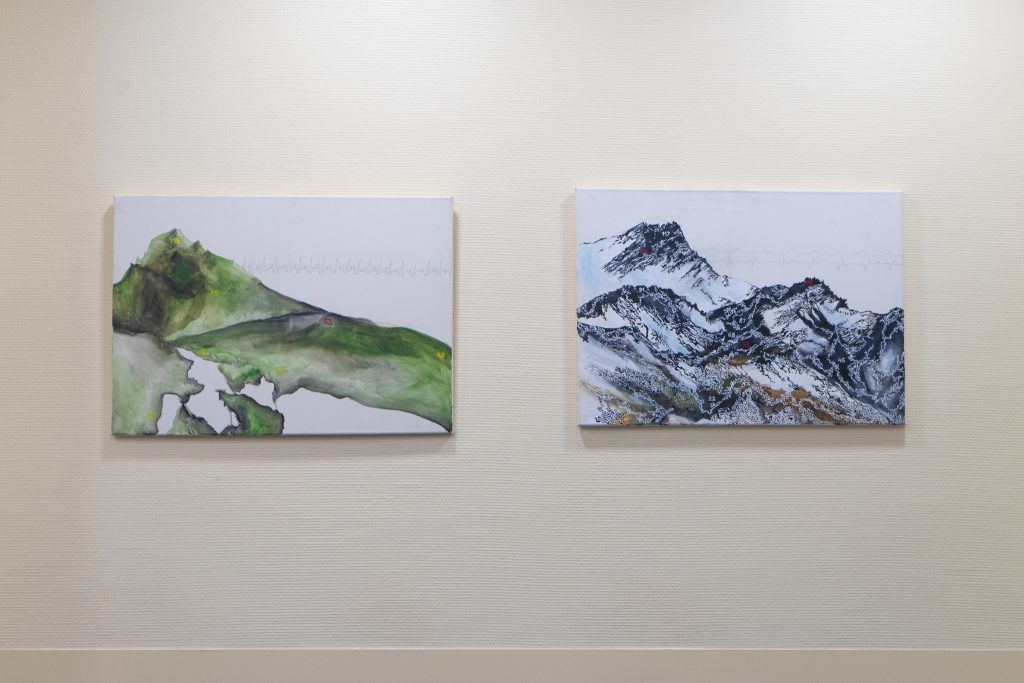
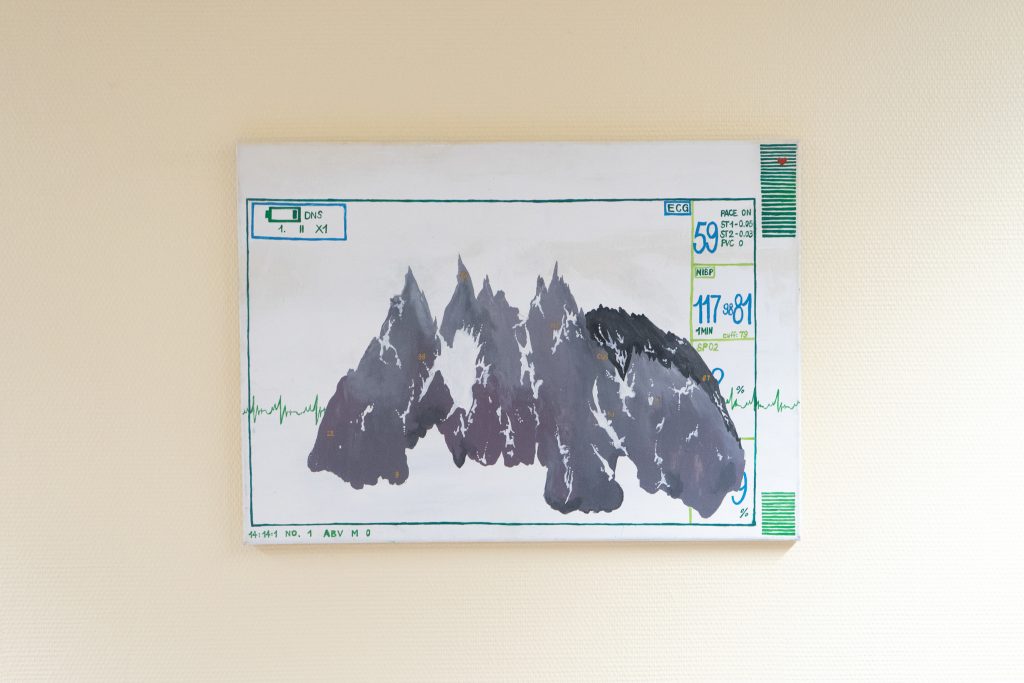
산, Charité Benjamin Franklin, Berlin
Photos © Mison Schreff
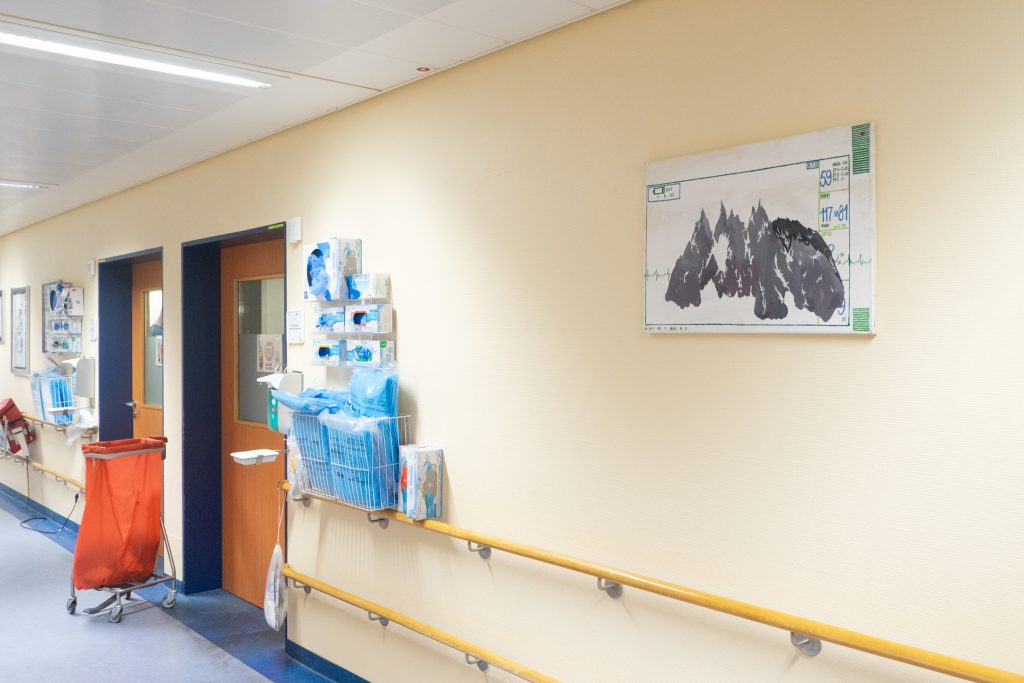
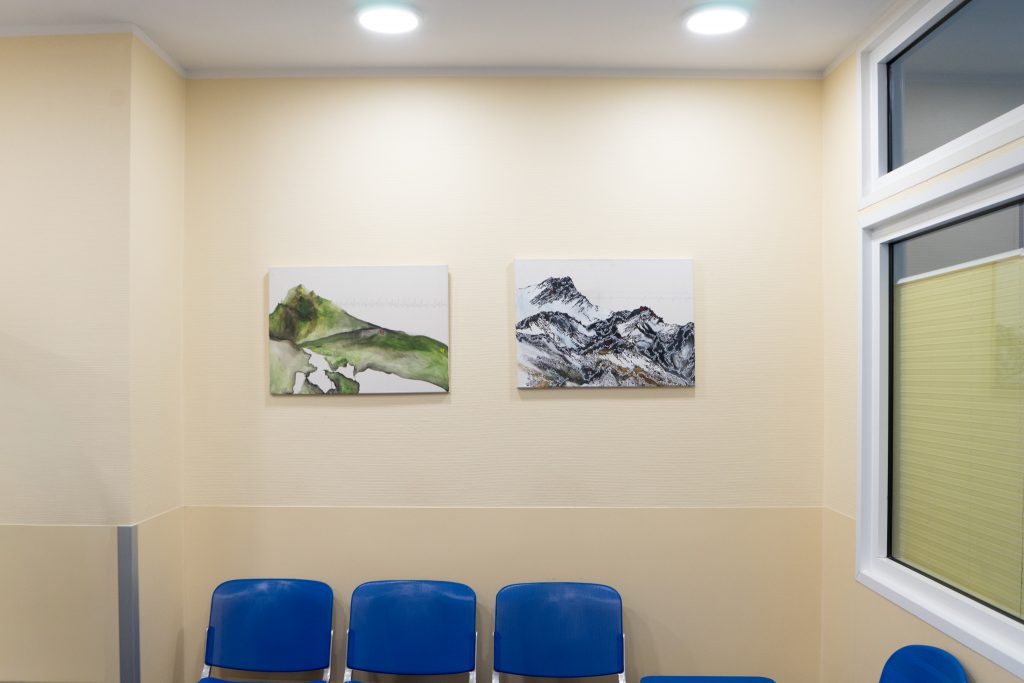
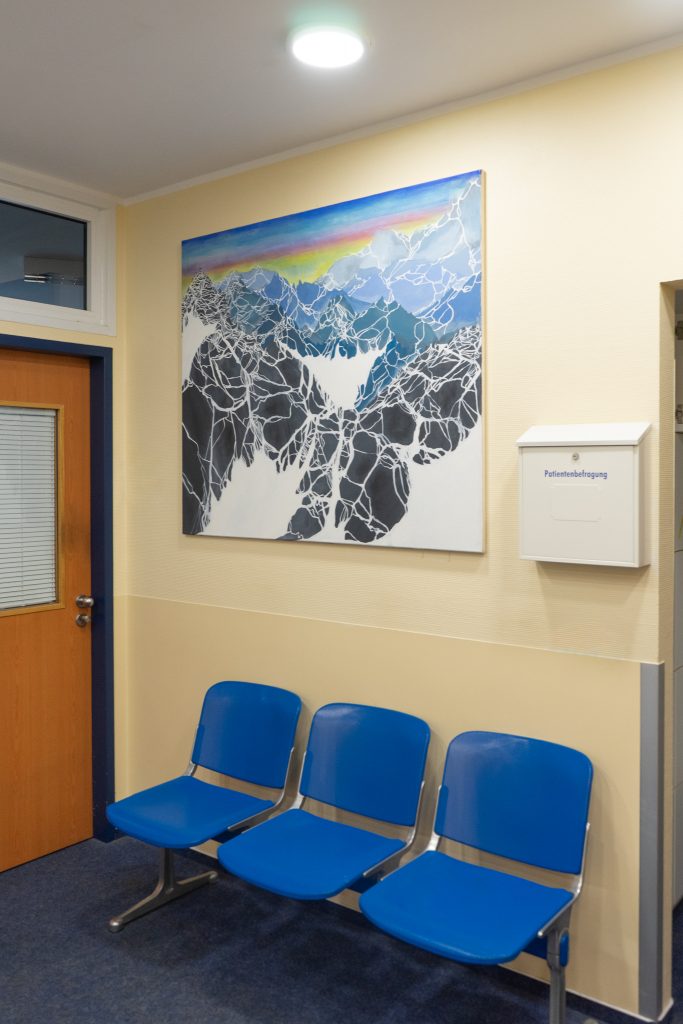
Für die Ausstellung „산“, koreanisch für „Berg“, zeige ich Arbeiten aus dem Jahr 2019. Ausgangspunkt sind EKG-Kurven, die ich in Bergformationen übersetze. Dabei löse ich medizinische Messdaten aus ihrem ursprünglichen Kontext und überführe sie in eine Bildsprache, die den Herzschlag nicht als Messwert, sondern als Ausdruck von Leben versteht.
Die Berge sind keine realen Landschaften, sondern innere Topografien. Sie folgen dem Rhythmus der Herzfrequenz und spiegeln Unregelmäßigkeiten, Brüche und Ruhephasen wider. Mich interessiert, wie ich wissenschaftliche Präzision und subjektive Wahrnehmung in einem Bild verbinden kann.
Der Berg ist für mich ein Symbol für Widerstand, Kraft und Beständigkeit, zugleich aber auch für Herausforderungen und Veränderung. Wie ein Herzschlag folgt auch eine Berglandschaft keinem gleichmäßigen Rhythmus. Sie besteht aus Höhen und Tiefen, aus Brüchen, Anstiegen und Gefällen.
Auf der Intensivstation des Charité Benjamin Franklin Krankenhauses kehren meine Gemälde zu ihrem ursprünglichen Bezugspunkt zurück. Hier bestimmen EKG-Kurven den Alltag. Indem ich die Linien in Landschaften übersetze, möchte ich den Blick von ihrer medizinischen Funktion auf die menschliche Erfahrung lenken, die sich hinter jeder Linie verbirgt.
Ausstellungsdauer: 22.04.–22.10.2026
Kuration: Song-Hak Song
FINAL SPRING, Uhland 145 (curated)
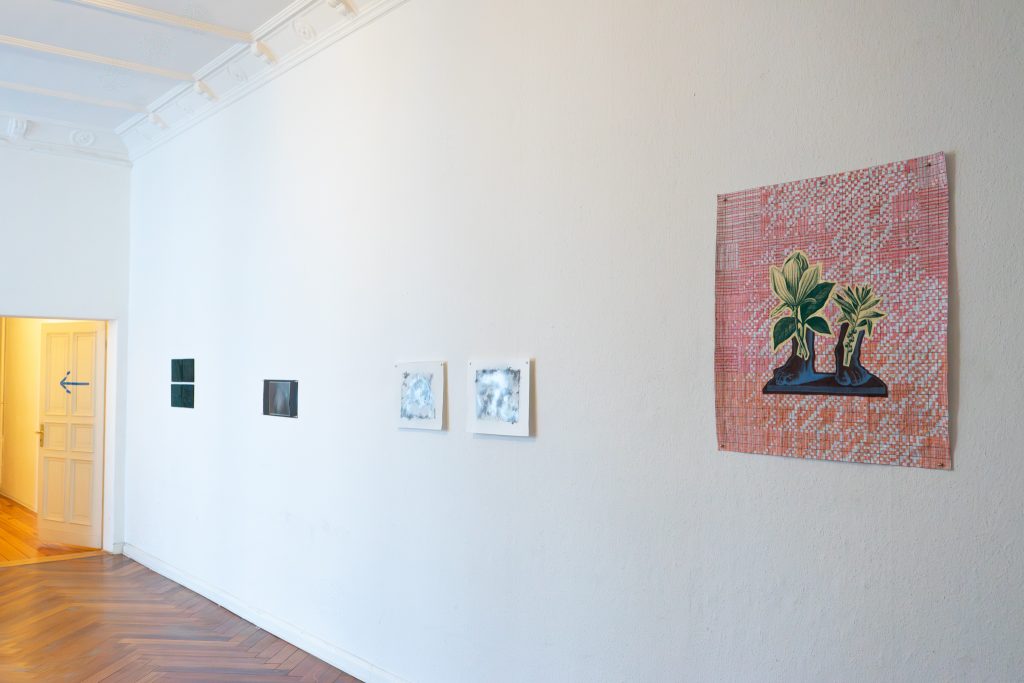
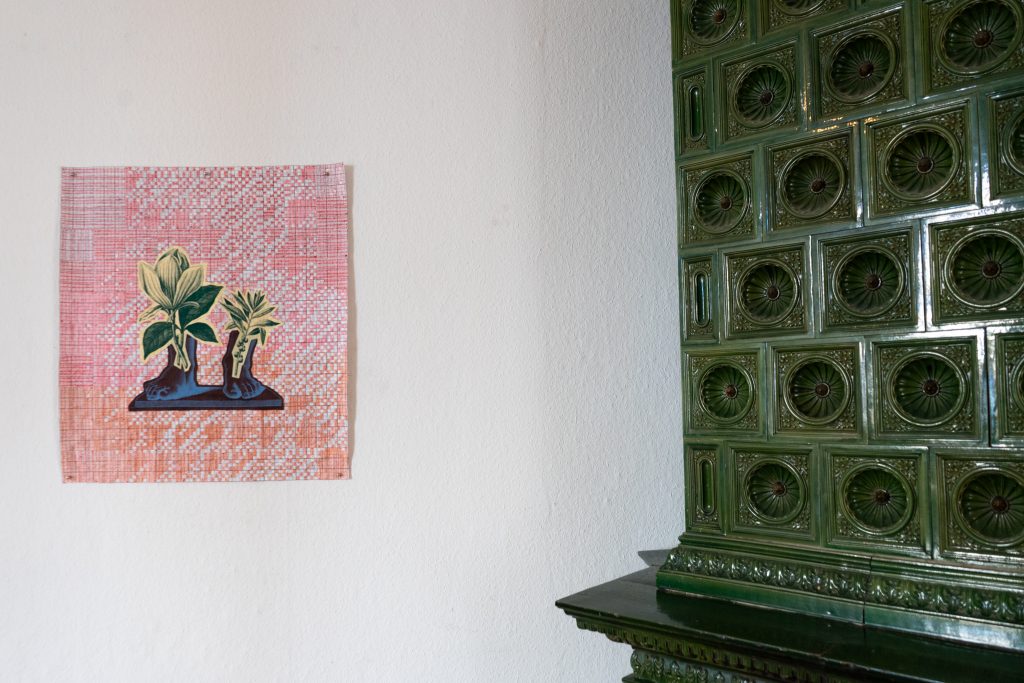
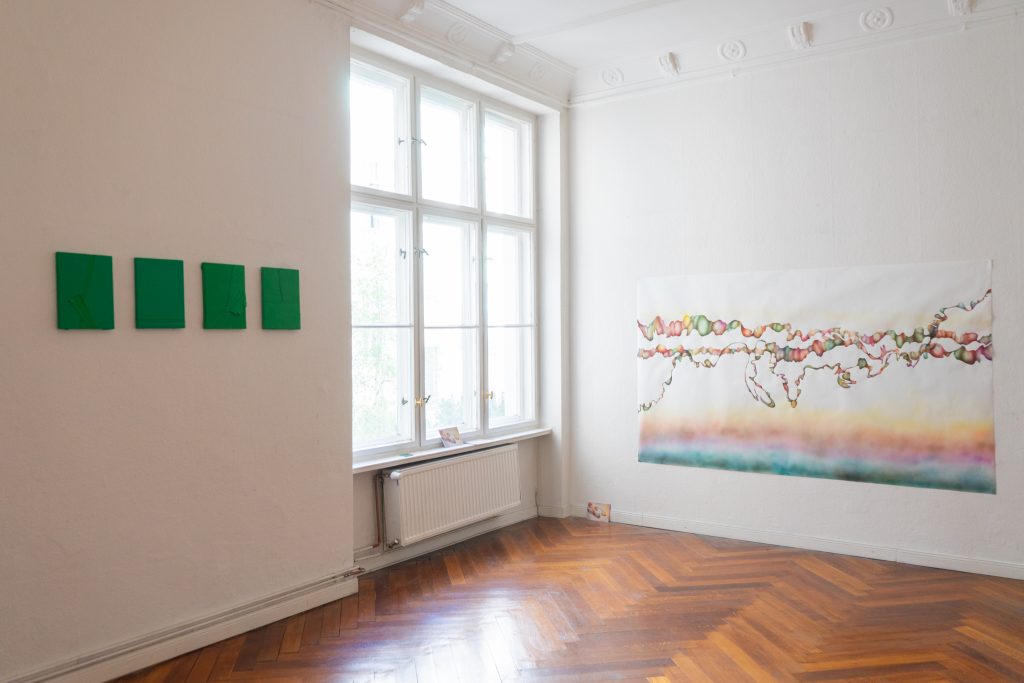
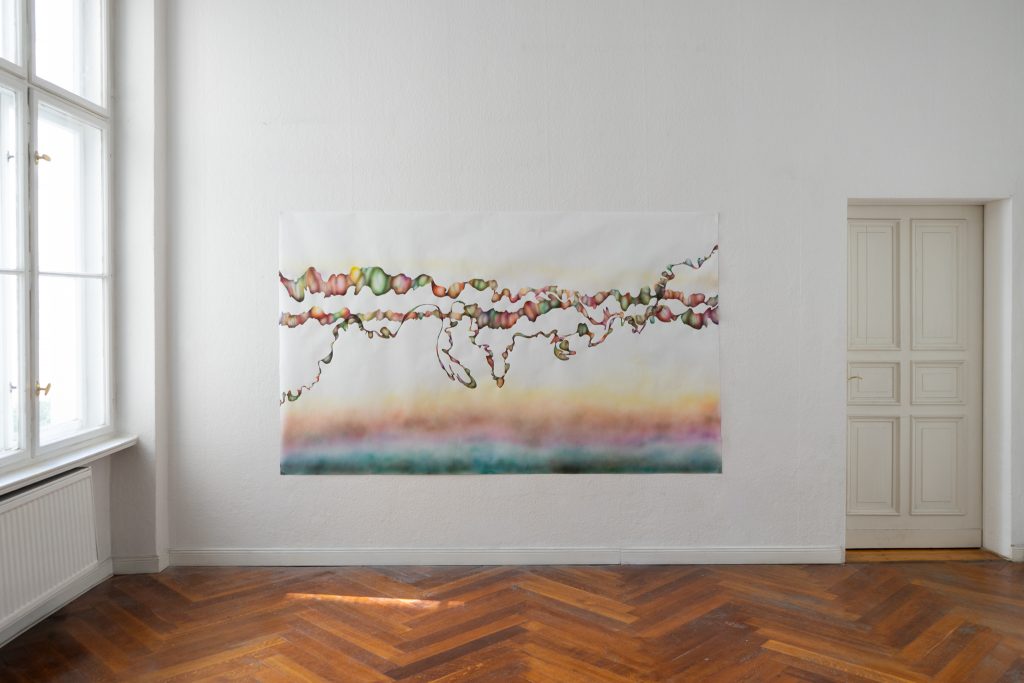
Photos © Mison Schreff
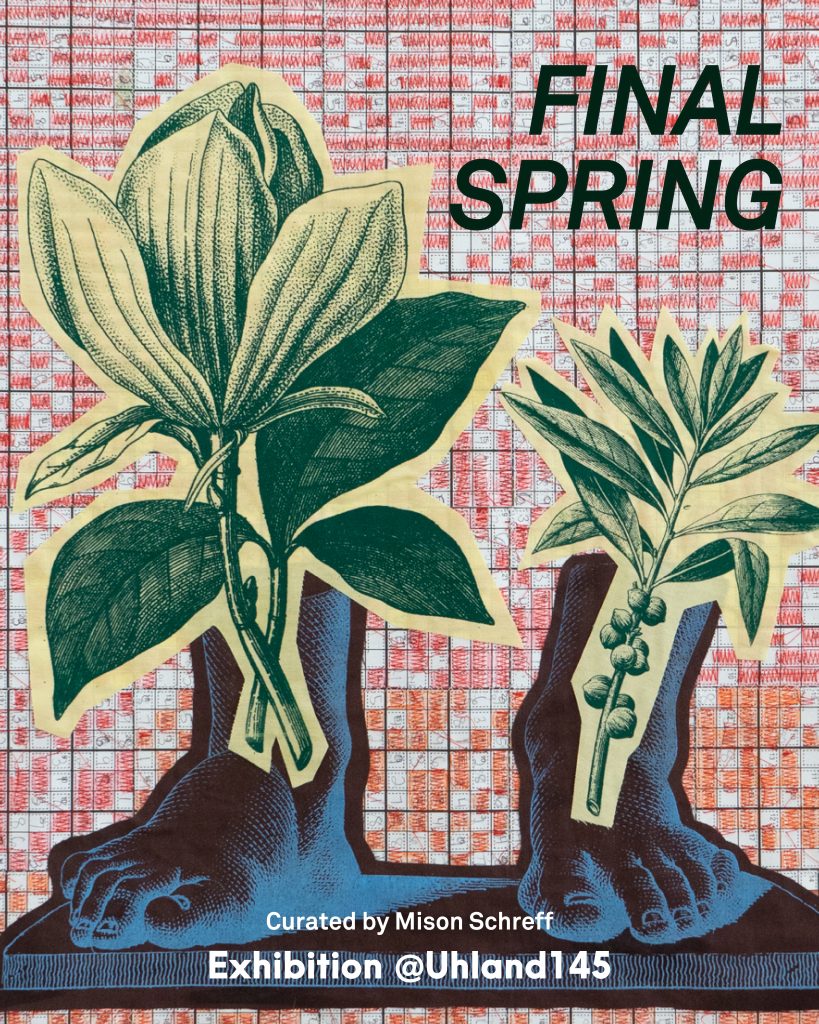
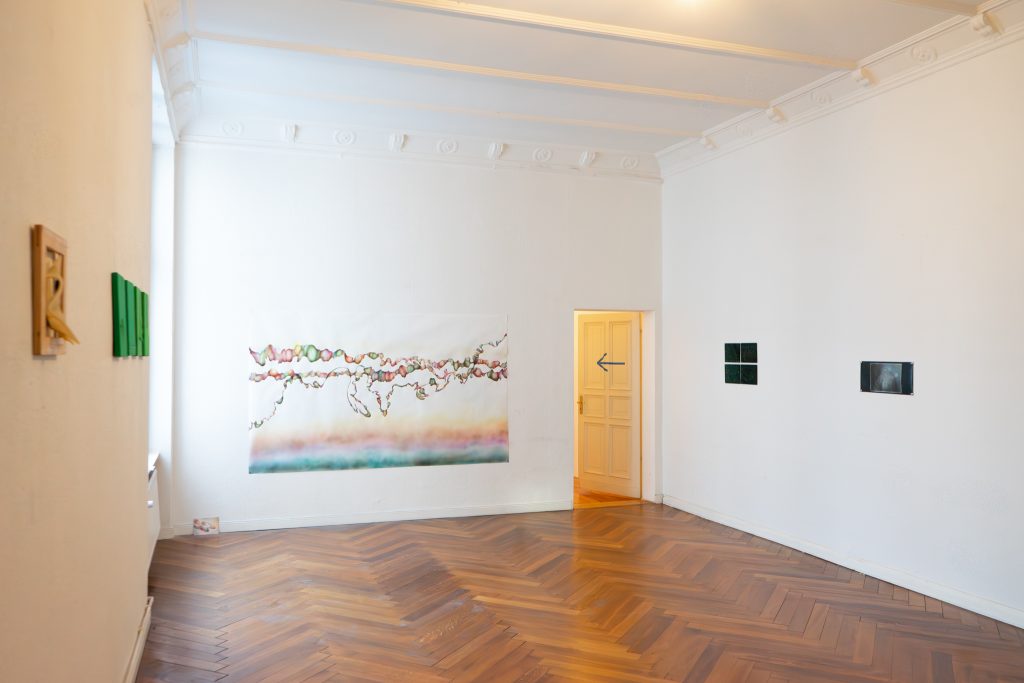
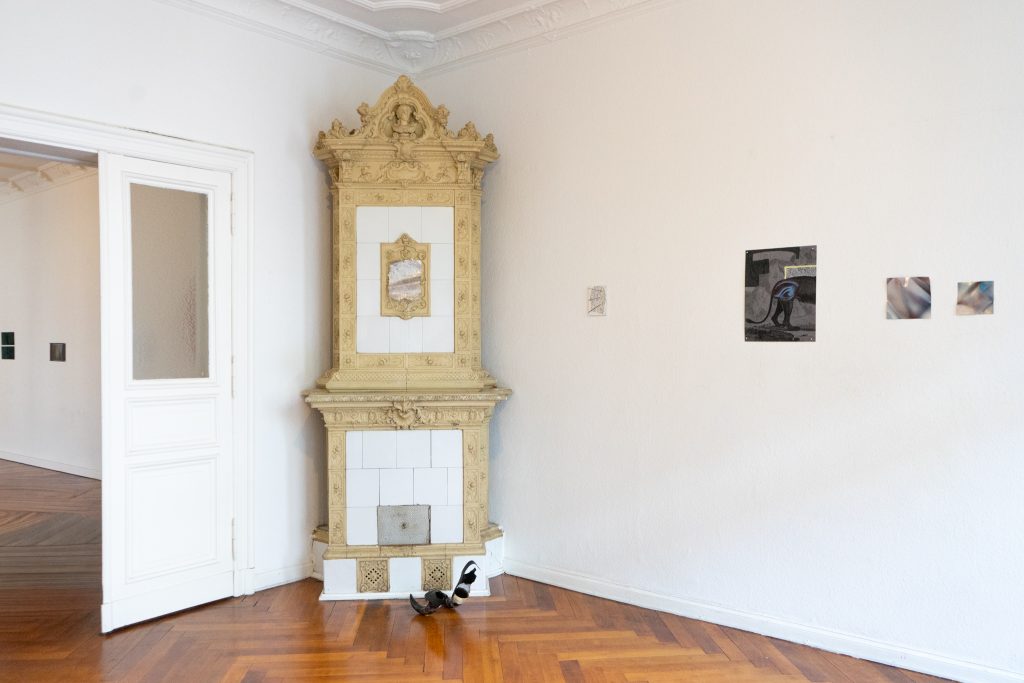
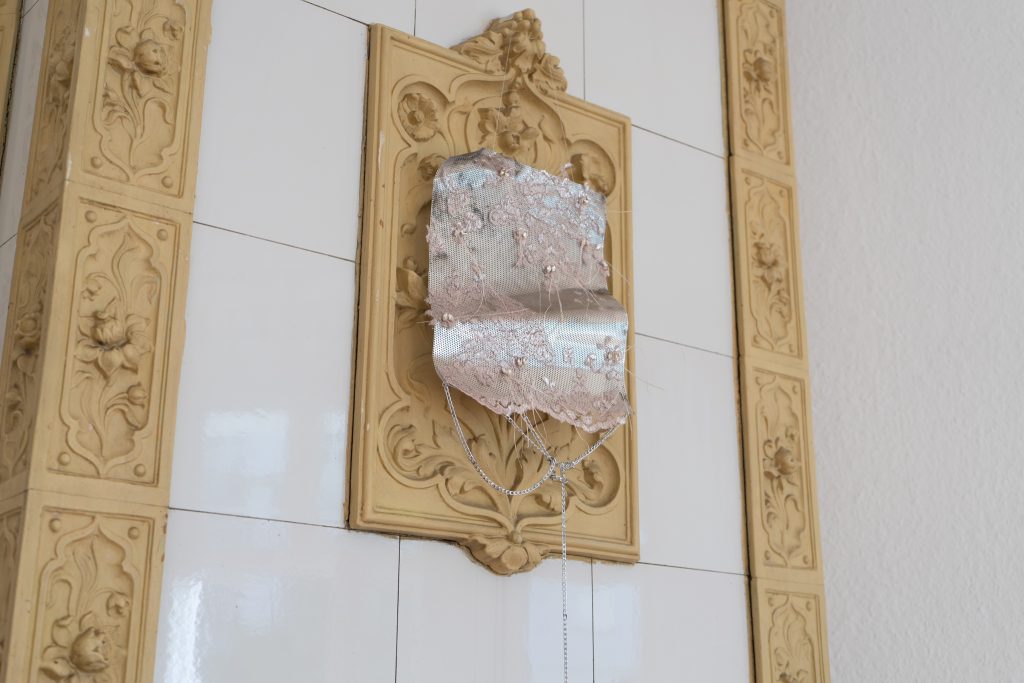
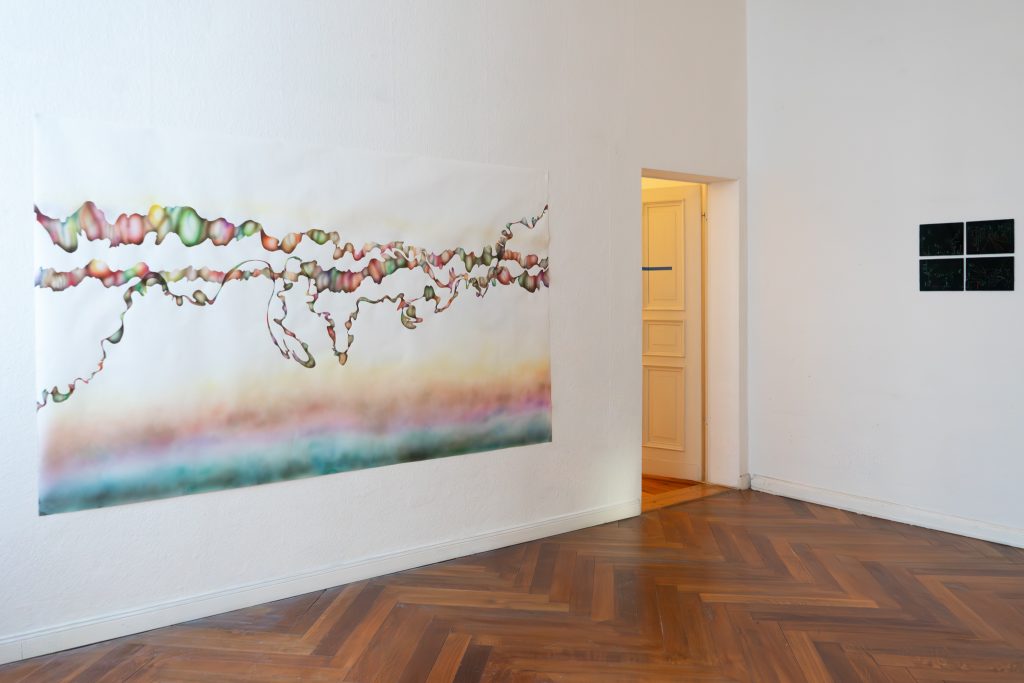
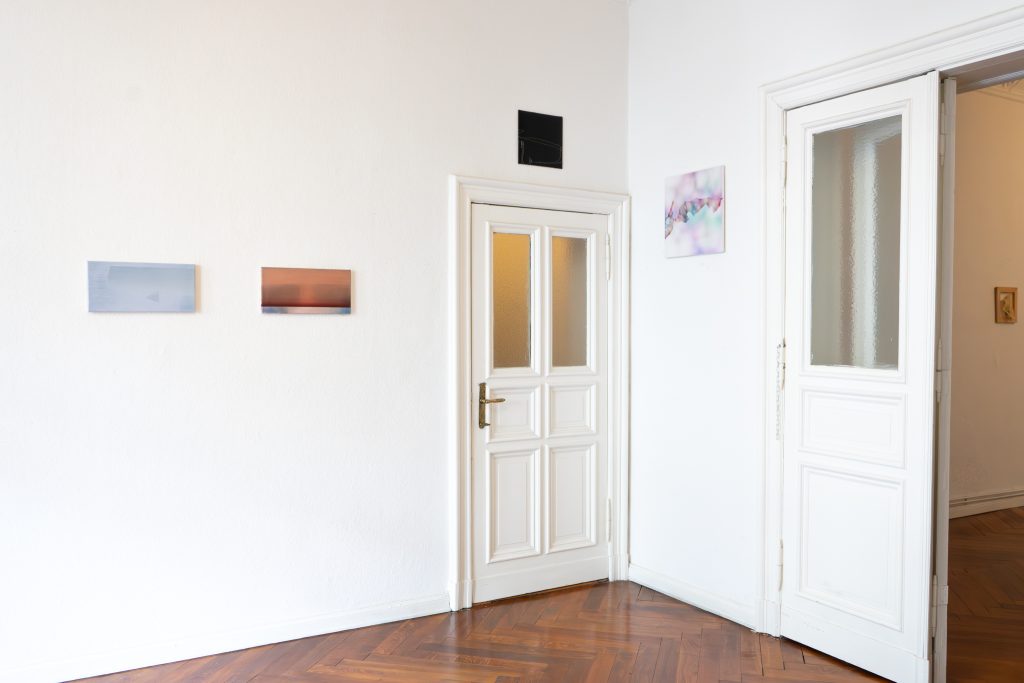
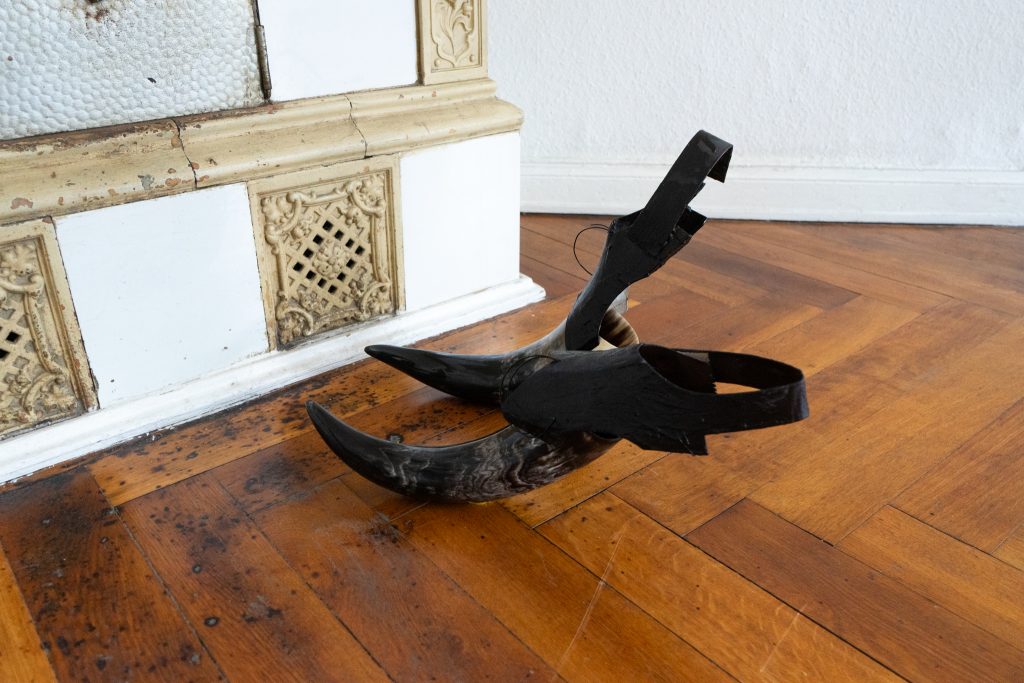
‚Final Spring’: a spontaneous exhibition in our studio apartment on Uhlandstraße 145, Wilmersdorf, Berlin. Sometimes an eviction notice doubles as a curatorial deadline.
Instead of leaving quietly, we decided to repurpose the space for a long, sunny afternoon. The space shifted into something unstable: part home, part exhibition, part construction site, with half-packed rooms and works installed wherever they still fit. What had functioned as an artistic living space became, for a brief moment, a site of autonomy- improvised and slightly out of control.
Set in Charlottenburg-Wilmersdorf, a district shaped by polished galleries and quiet wealth the exhibition operated in friction with its surroundings. Installed in the former office of architect Stephan Braunfels, it was less a clean presentation than a temporary occupation, not entirely by choice.
Rather than framing abstract positions, the exhibition worked from within its own conditions: limited time, unstable ground, and the need to produce something before access disappears.
In the end, it was our final spring.
Curated by Mison Schreff
Graphic Design by Shir Shoval Simhoni
HERS, Pavillon am Milchhof
Photos © Mison Schreff
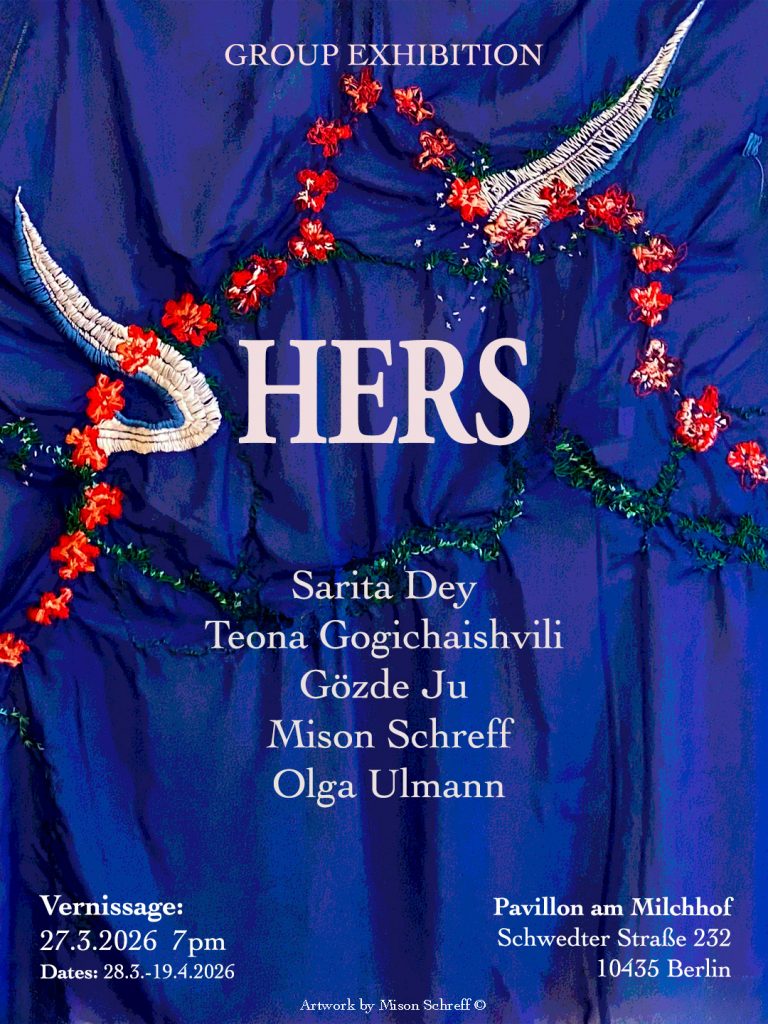
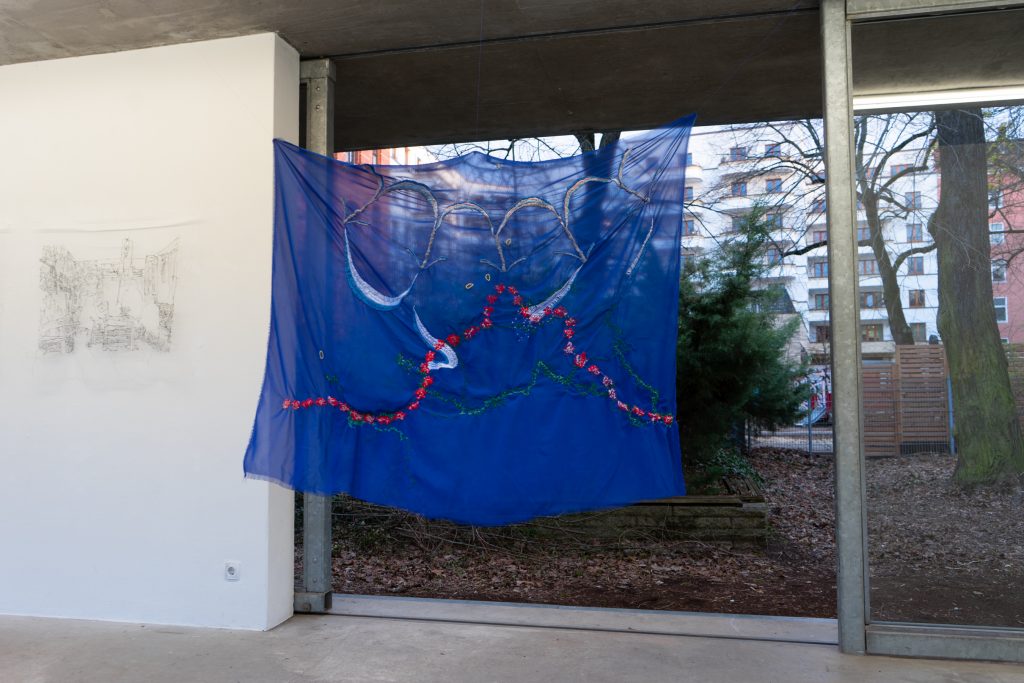
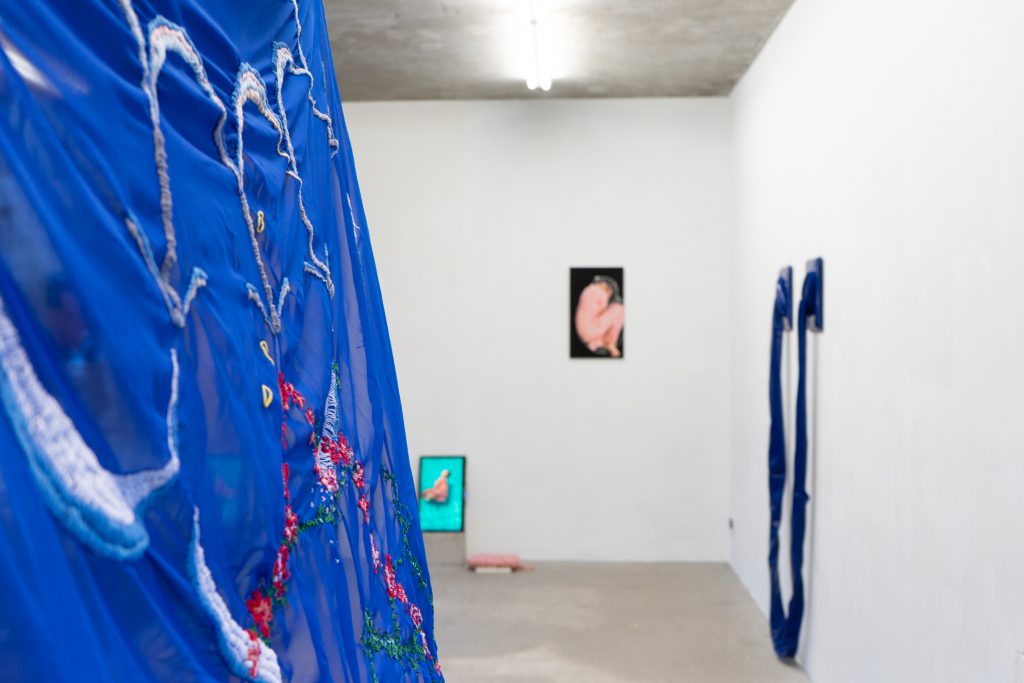
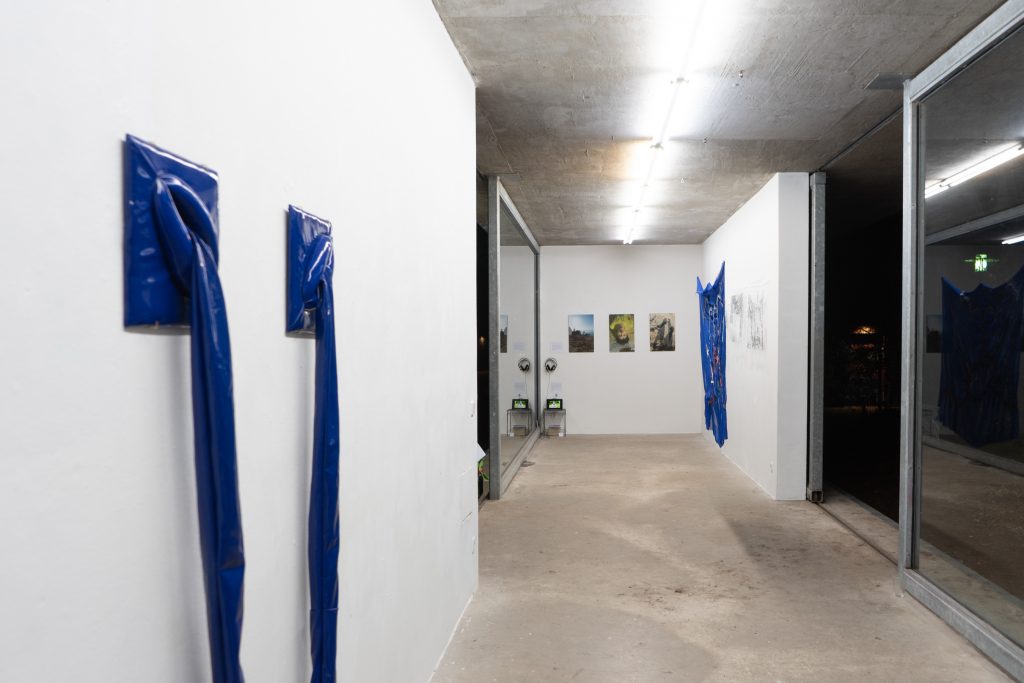
This exhibition brings together five women artists whose works unfold layered narratives around home, belonging, the body, memory, and women’s labor. Coming from different geographies and disciplines, the artists draw on personal experiences, family relationships, cultural heritage, and political imagery and systems of representation— exploring the fragile yet transformative nature of what we call her(s) home.
Mison Schreff’s embroidered work subtly reinterprets architectural and political symbolism through a delicate process of abstraction. Teona Gogichaishvili‘s photographs visualize the evolving forms of motherhood, capturing the delicate balance between closeness and distance over time. Sarita Dey’s practice explores themes of belonging, womanhood, and the notion of “returning home,” articulated through bodily gestures and embodied experiences unfolding across physlandscapes, shifting geographies, and the emotional terrain of family histories. Gözde Ju’s works focus on the often-invisible histories of domestic crafts and women’s labor, inviting a reconsideration of family relations, social roles, and the act of building a home through everyday objects. Olga Ulmann revisits historical representations of the female body and examines their lasting influence on contemporary visual culture.
Taken together, these works suggest that home is not merely a physical space, but a field woven from memories, relationships, representation, and the structures – political and personal- that shape what we are allied to call our own.
Exhibition Text by Gözde Ju
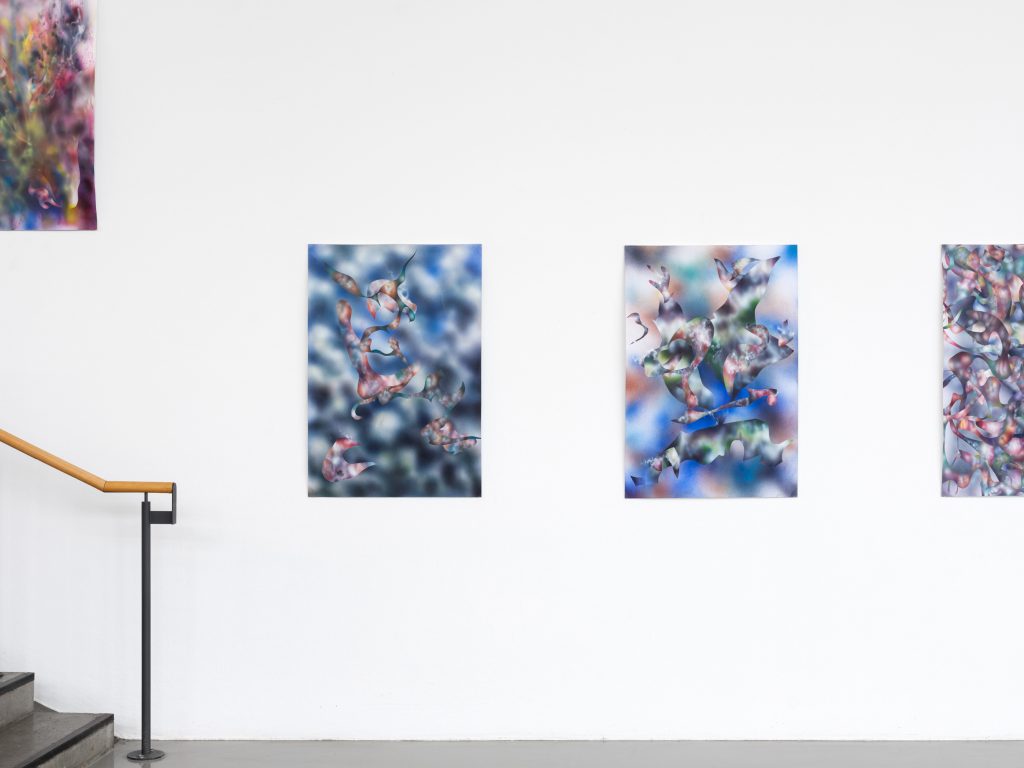
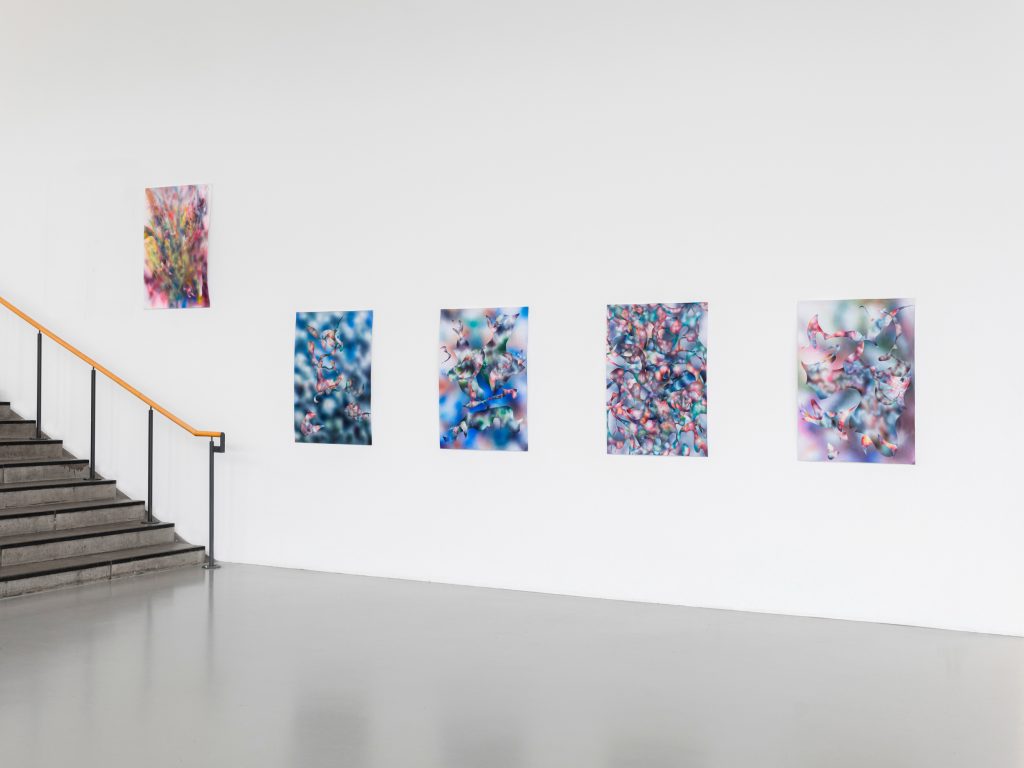
a script, a sketch, a show, documenta-Halle
Photos © Lukas Melzer
Ausstellungstext
Die Ausstellung versteht sich als script, sketch und show: als vorbereitende Probe, tastender Entwurf und feierliche Aufführung. Sie entfaltet damit eine zeitliche Dramaturgie, eine räumliche Choreografie und begreift die Setzung der gezeigten Arbeiten als Gruppenausstellung und zugleich als Maquette – als Probeaufbau, szenische Setzung, Modell. Sie ist Architektur und Theater, Performance und Probe, Show und Skizze, ein Ort der Synchronizität und Permanenz, aber auch des Widersprüchlichen und Vorläufigen.
An der Schwelle zwischen Abschlüssen und Anfängen zeigt die Ausstellung Übergänge – Rückblicke und Ausblicke, Dokumentation und Inszenierungen dessen, was kommen könnte. In diesem Spannungsfeld von Vorläufigkeit und finaler Präsentation sind die gezeigten Positionen sowohl als abgeschlossene Arbeiten als auch als Entwürfe für Zukünftiges lesbar. Die Probe wird hier zur Arbeitsmethode des Ausstellens. Im Gegensatz zum klassischen Verständnis, das auf Perfektionierung zielt, erscheint sie als temporäres, ergebnisoffenes Format.
Die Offenheit der Probe lässt Raum für Zufall, Brüche und Variation und versteht den Ausstellungsraum als Ausgangspunkt einer temporären gemeinsamen Inszenierung. Eine Premiere, die Gleichzeitigkeit erlaubt, Differenzen sichtbar macht und die Frage stellt, wie eine Bühne geteilt werden kann. Ein Anfang, ein Höhepunkt, ein einziges Ereignis: a script, a sketch, a show.
Kuration: Lizzy Ellbrück und Johanna Schäfer
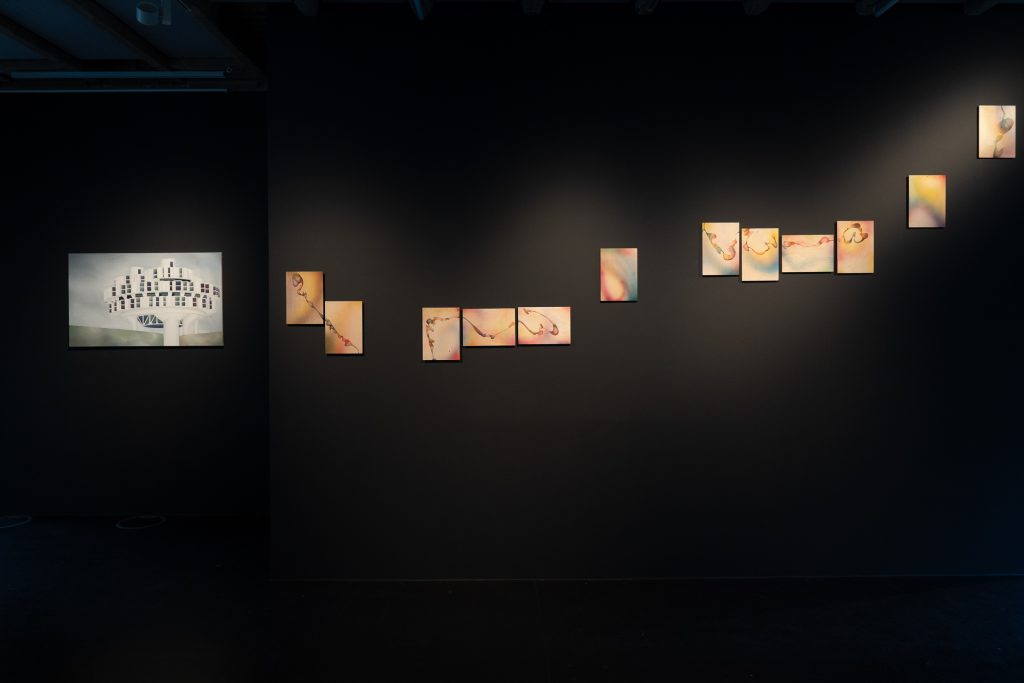
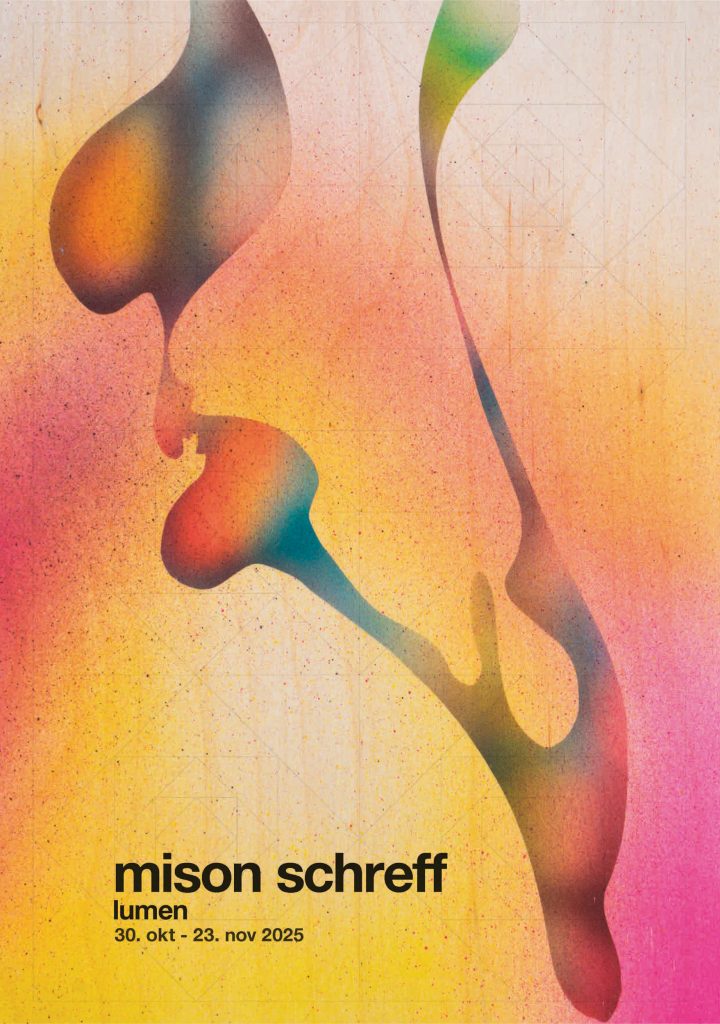
lumen, saasfee*pavillon (solo)
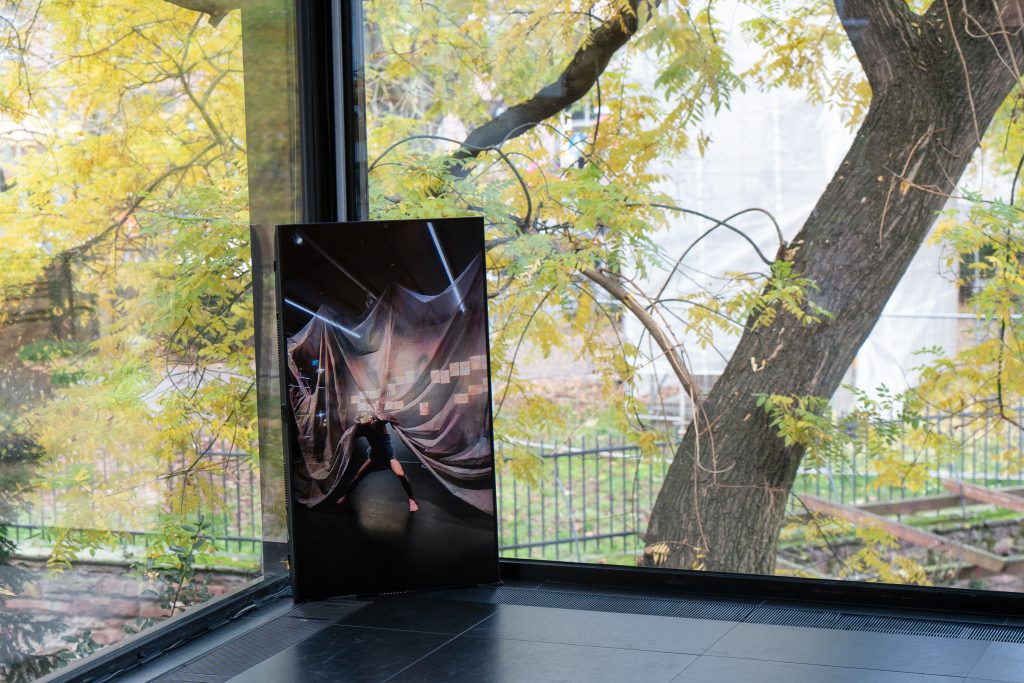
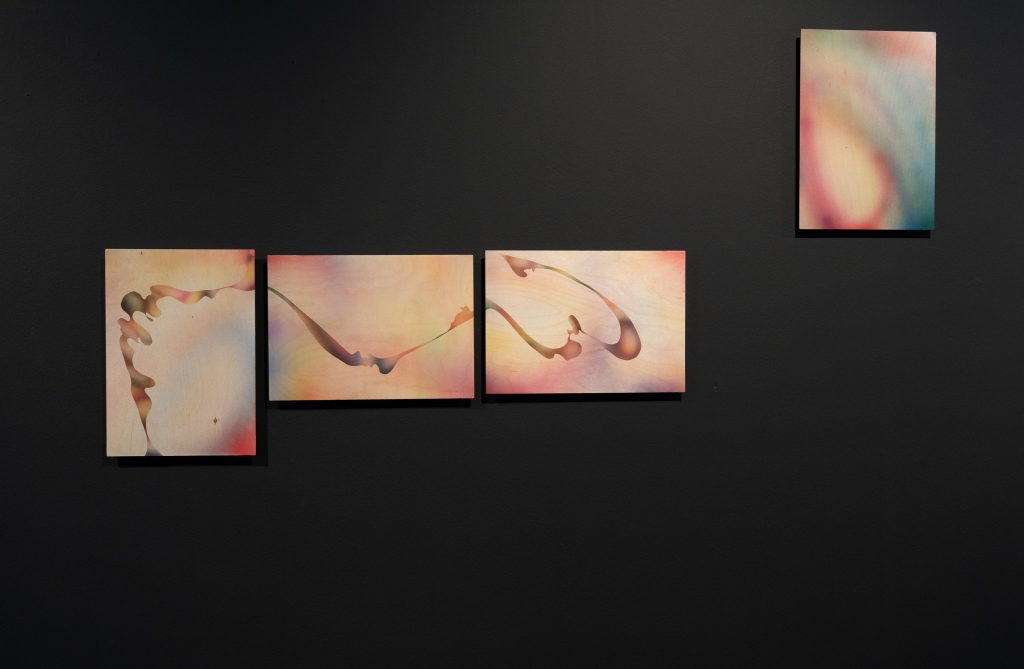
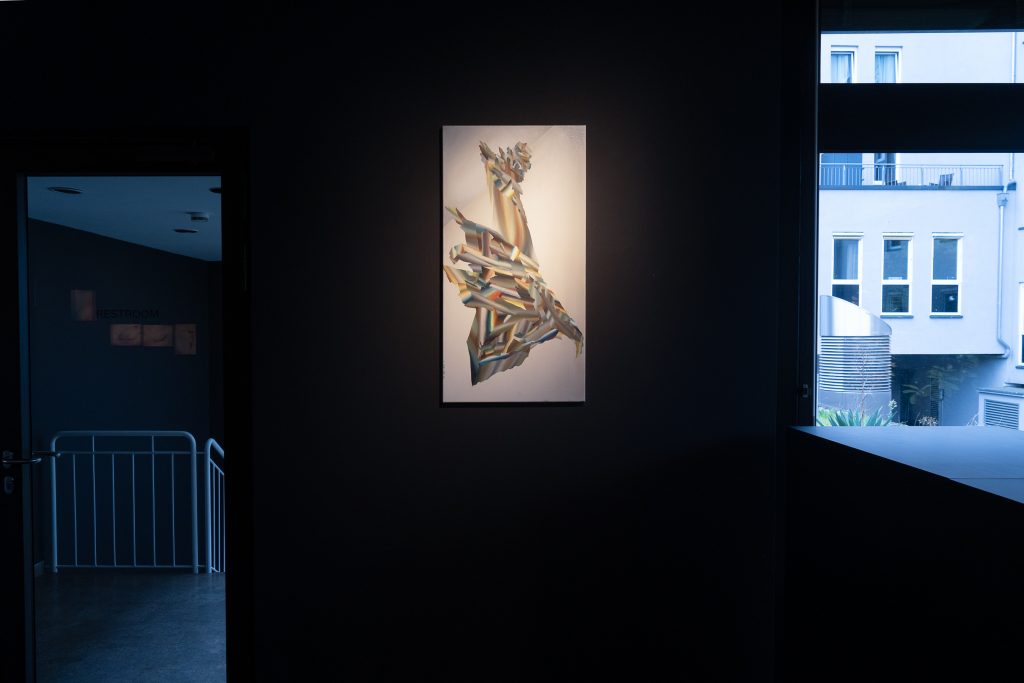
Photos ©saasfee*pavillon
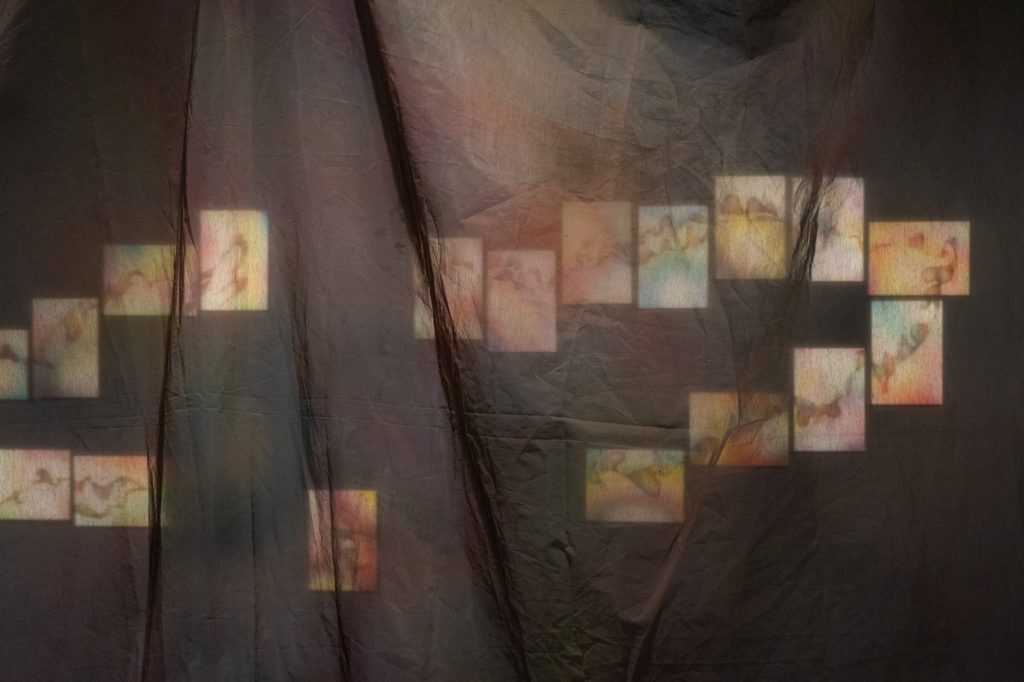
Photos ©Yü Jin
Photos ©Tessa Trautmann
Ausstellungstext
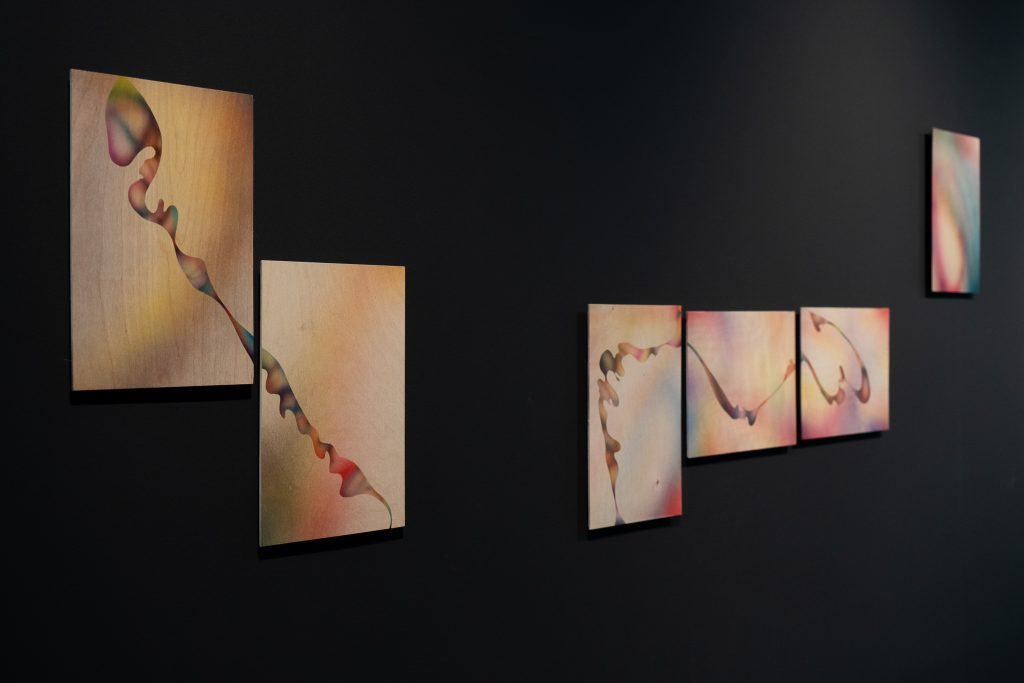
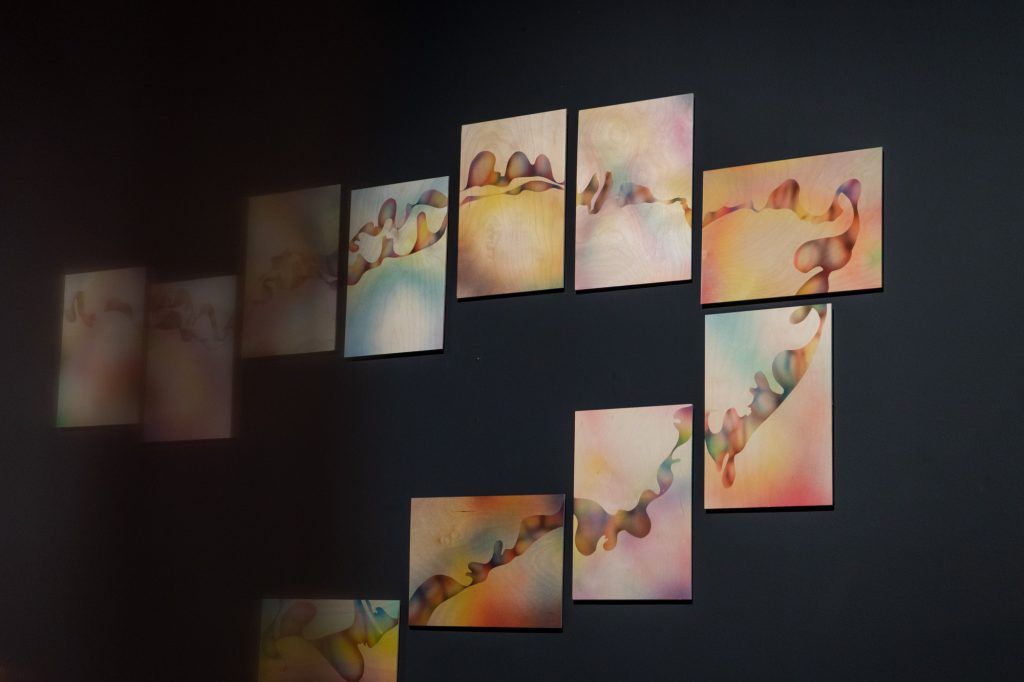
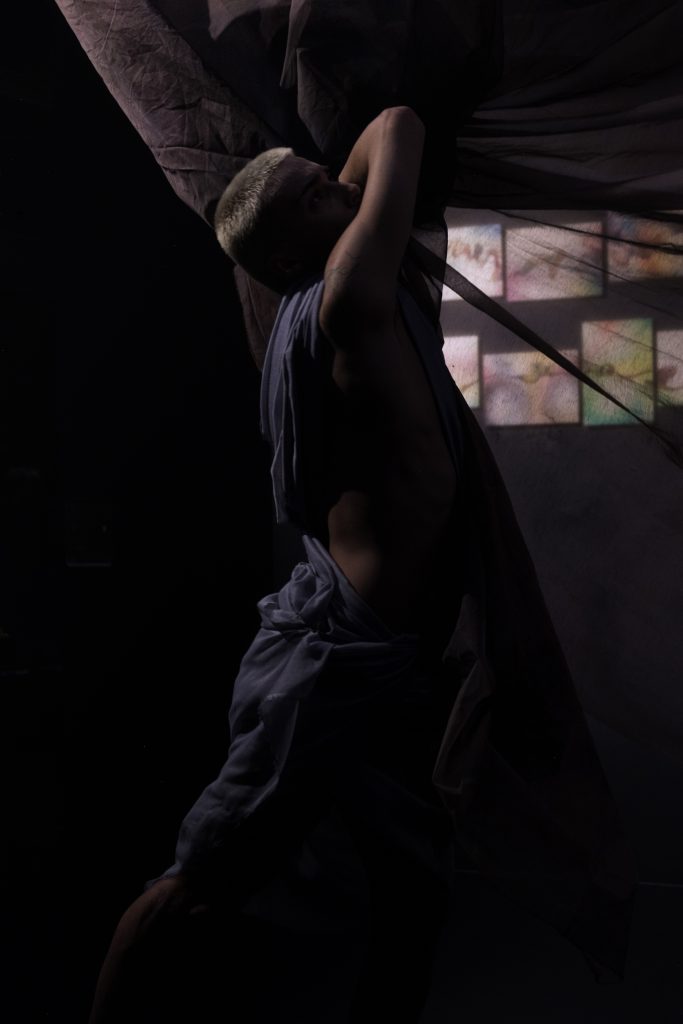
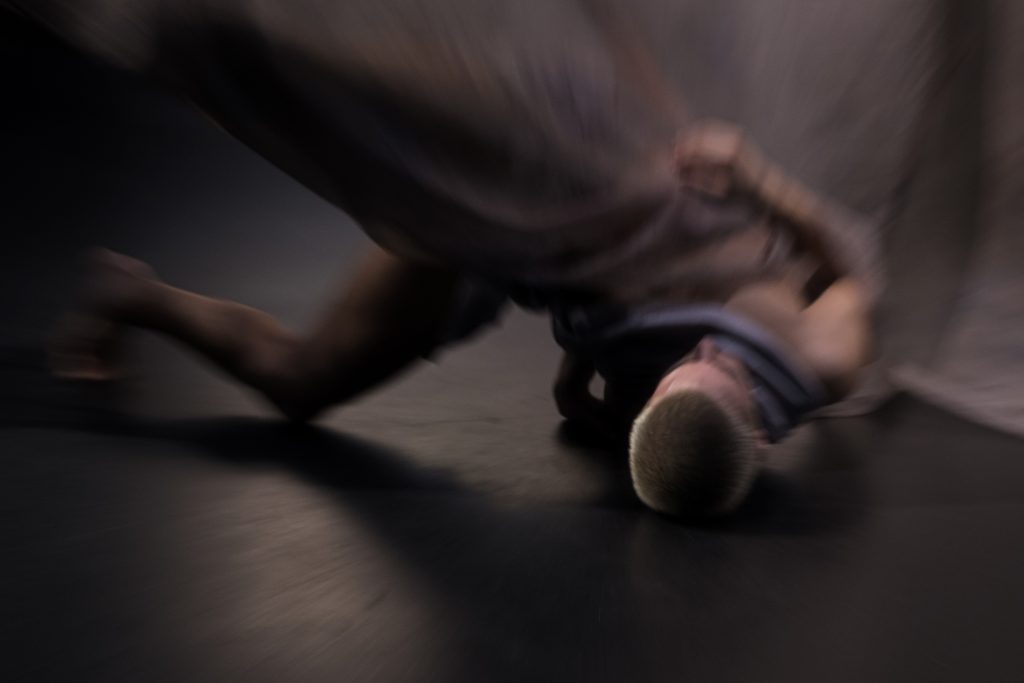
Für die Ausstellung im saasfee*Pavillon verbindet die Künstlerin Mison Schreff ihre Werkserie lumen mit den Werkzyklen Druzhba und IX Fortas. Die Werke lumen und Resonance:Piece treten dabei in einen direkten Dialog mit der gläsernen Architektur des Pavillons und verhandeln Themen wie Körperlichkeit, Transparenz und die Auflösung räumlicher Grenzen.
Die Textilarbeit Resonance:Piece wird während der Vernissage durch den Tänzer Paul Elie aktiviert, begleitet durch das Musikstück Suchme des Komponisten Vahid Hosseini.
Die Verbindung der Werkserien lumen, Druzhba und IX Fortas lässt sich als eine Gegenüberstellung zwischen konstruierten und organischen Formen verstehen. Der Einsatz von Sprühfarbe steht dabei für einen bewussten Bruch mit festgelegten Strukturen und die Hinwendung zu einer offenen, fließenden Formensprache. Die Künstlerin betrachtet den Körper als eine Form von Architektur, der als Träger von soziopolitischen, kulturellen und ökonomischen Implikationen agiert.
Die Werke Druzhba I-II und IX Fortas III entstanden 2021 während der Corona-Pandemie. Druzhba- Russisch für Freundschaft- basiert auf einem während der Sowjetzeit errichteten Sanatorium auf der Krim-Halbinsel, das nach dem Konzept des Panoptikons entworfen wurde. IX Fortas bezieht sich auf das Denkmal des litauischen Bildhauers Alfonsas V. Ambraziūnas in der Festungsanlage Neunter Fort in Kaunas, Litauen.
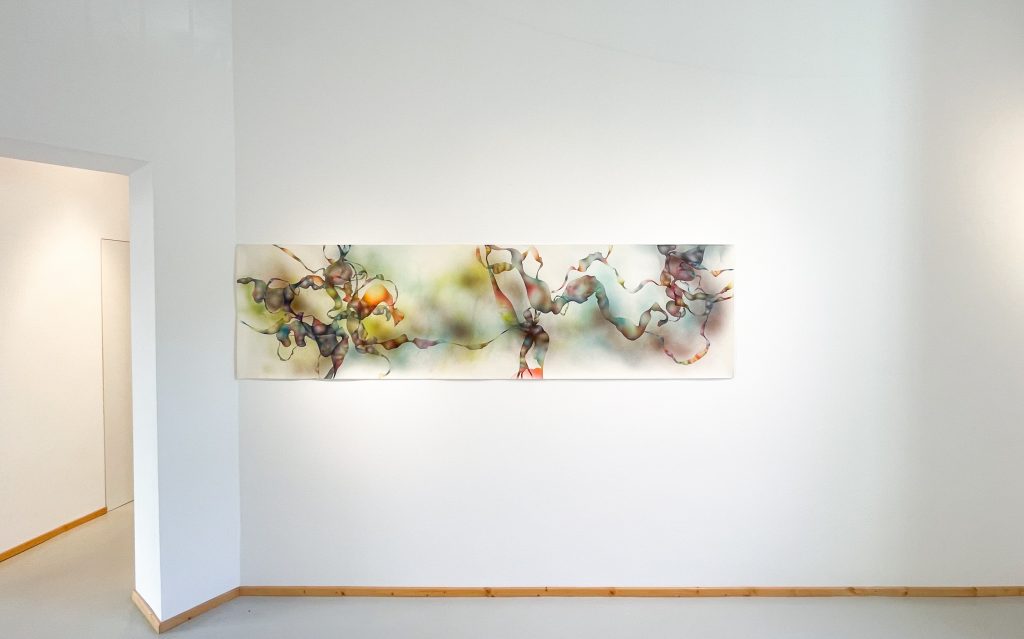
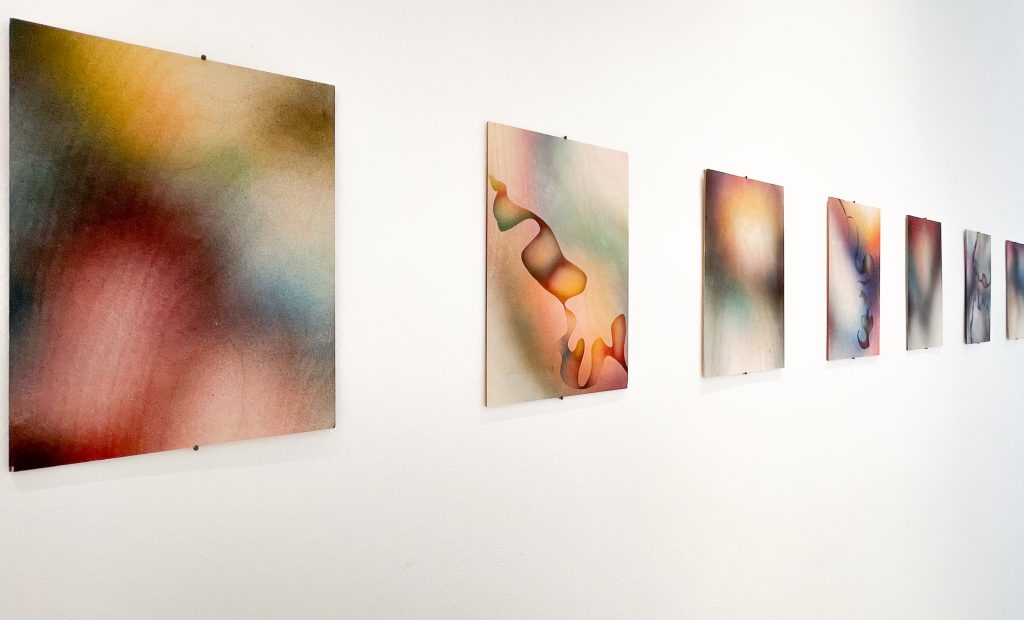
In lumen erschafft Schreff mit Airbrush auf Holz organische, biomorphe Formen. Beide Werkgruppen befassen sich mit dem Zusammenspiel von Licht, Struktur und Auflösung.
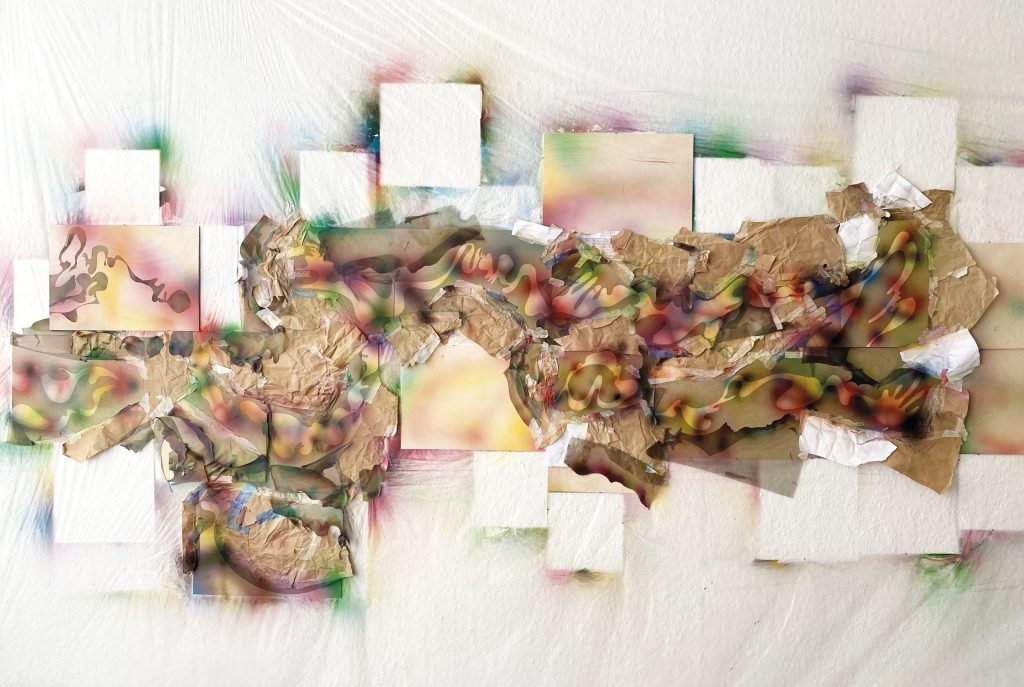
Photo ©Mison Schreff
+1 Hospitality As Artistic Practice, Mainova-Zentrale
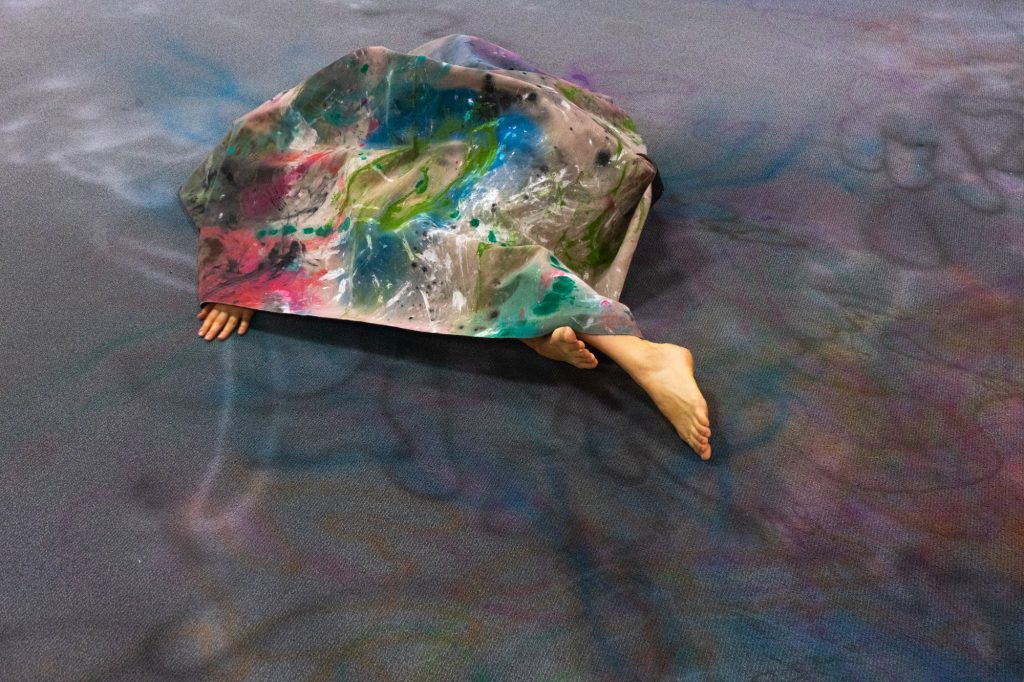
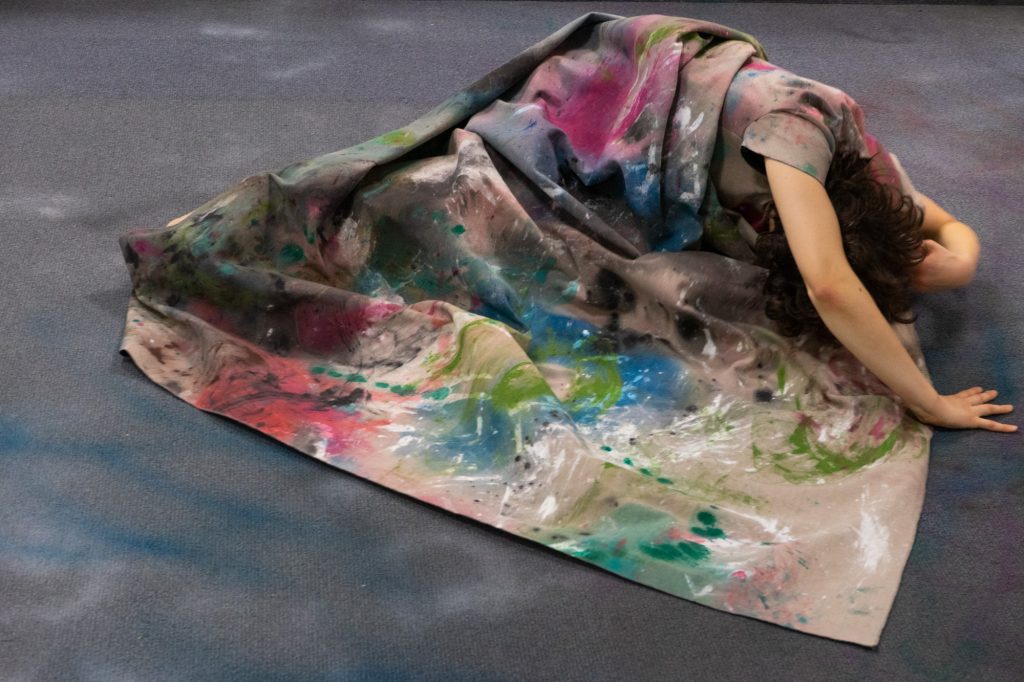
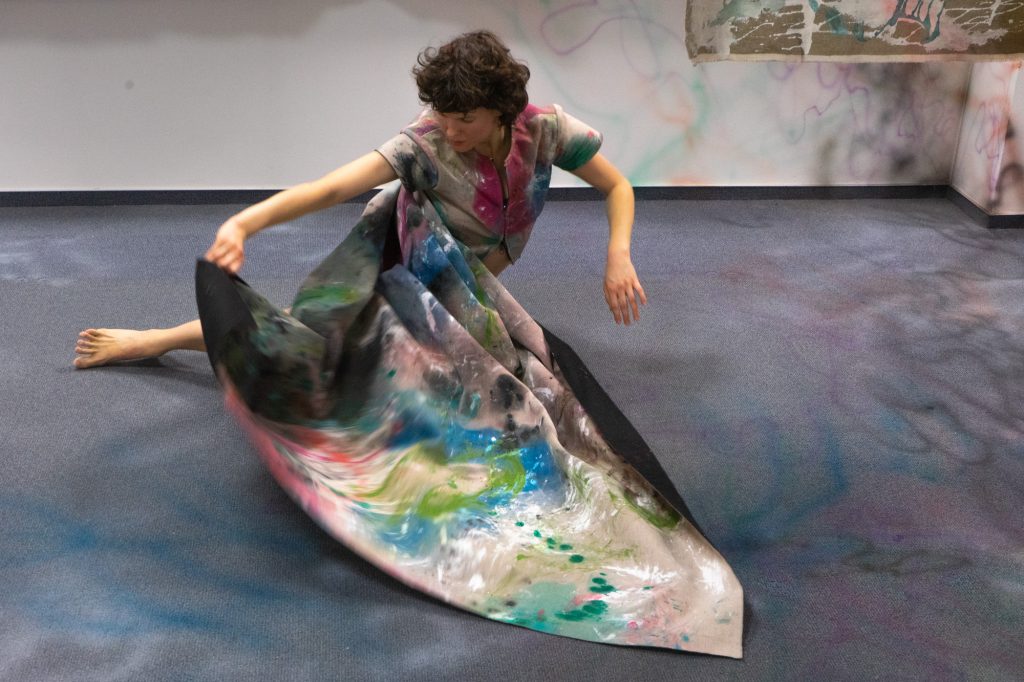
Photos © Mison Schreff
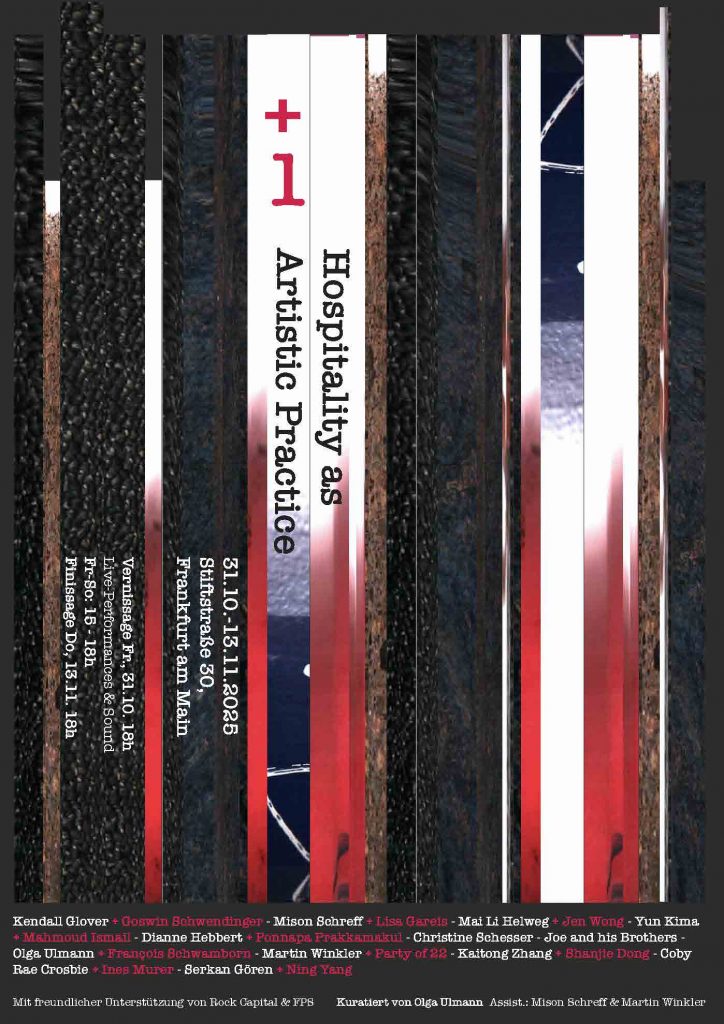
+1 Hospitality As Artistic Practice
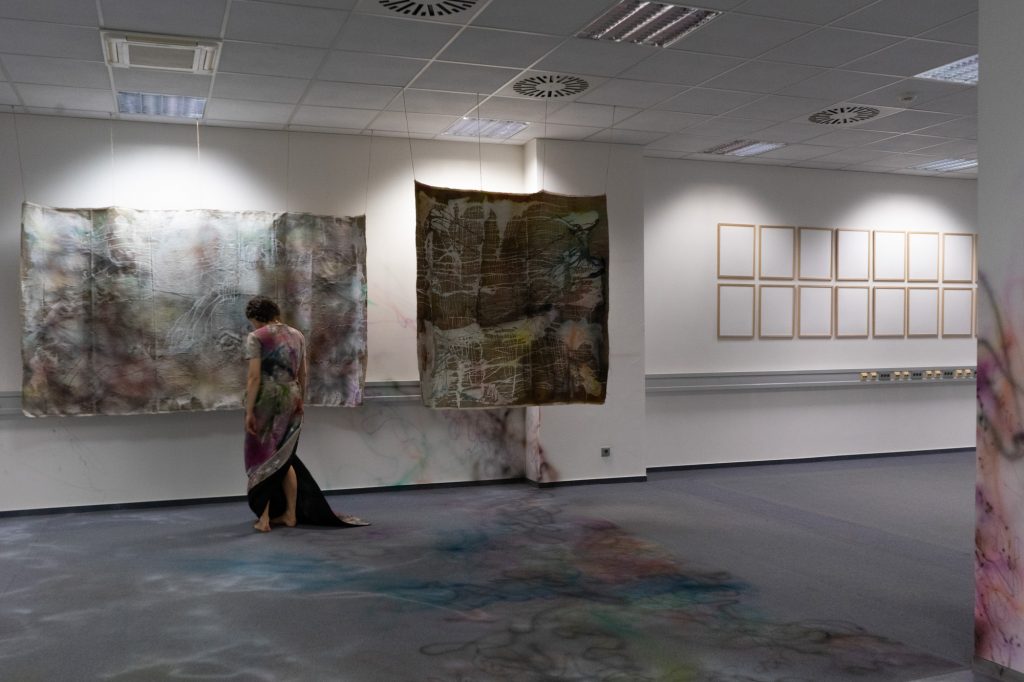
For two weeks, the former Mainova Hall in Frankfurt becomes a place of transition, a space no longer defined by its previous function, but by the encounters it makes possible. +1 Hospitality As Artistic Practice, initiated by Olga Ulmann in collaboration with Martin Winkler and Mison Schreff, approaches hospitality not simply as an act of welcome, but as an artistic methodology: an invitation to share space, exchange perspectives, and rethink authorship through collaboration.
Bringing together more than twenty artists from Frankfurt, Berlin, London, New York, Seoul, and Beijing, the exhibition unfolds through eleven artistic pairings. Each invited artist is joined by a +1, another voice, another perspective, creating dialogues across painting, sculpture, sound, performance, and digital media. Rather than presenting fixed positions, the exhibition embraces process, openness, and the productive uncertainty of working together. The vacant architecture becomes a temporary laboratory in which artistic practices intersect, overlap, and respond to one another, transforming absence into possibility.
Throughout the exhibition, the former hall is activated as a living environment rather than a neutral container. Works emerge in relation to one another, to the architecture, and to the people inhabiting the space. Hospitality unfolds as a condition of attentiveness: a willingness to receive, to be affected, and to create space for exchange. The project proposes collaboration not as a means to consensus, but as a way of sustaining difference, allowing multiple voices and temporalities to coexist within a shared spatial experience.
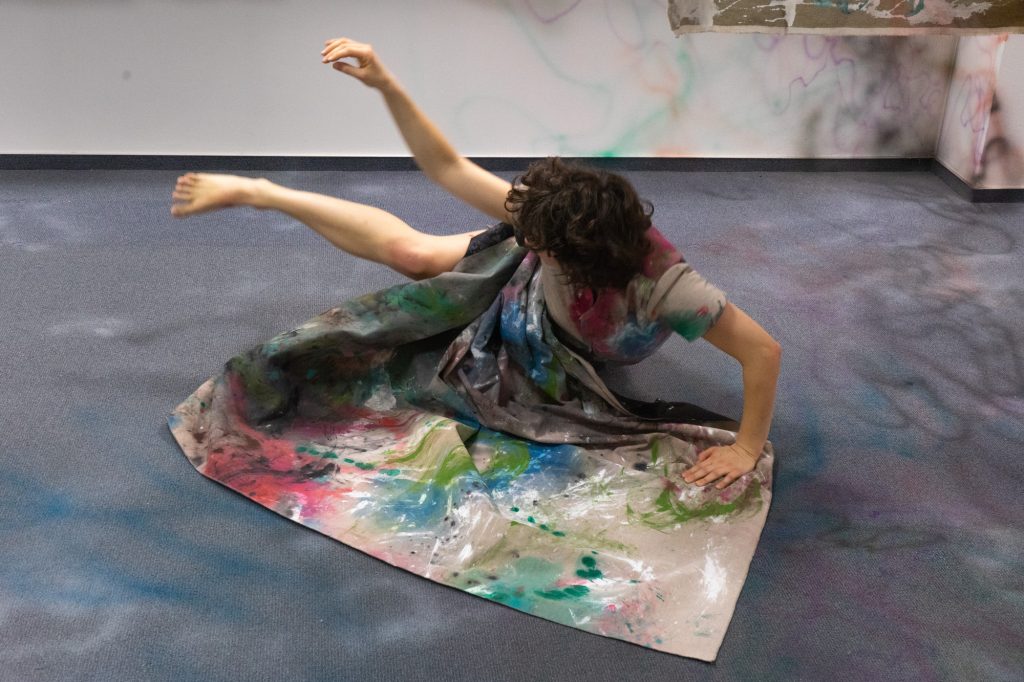
Within this collective constellation, Mison Schreff and Lisa Gareis present Interspherence, a site-specific installation that dissolves the boundaries between painting, architecture, and performance. Schreff transforms the space through paintings created on site, airbrushing directly onto walls and floor, allowing the vacant architecture to become both surface and collaborator. Gareis activates this painted environment through a live performance in which the body becomes an extension of the work itself. Painting and choreography continuously shape one another, turning stillness into action and making the ephemeral tangible. Interspherence understands the space not as a backdrop but as a participant: an echo chamber where gesture, movement, colour, and presence continually reshape one another, embodying painting as a shared and evolving experience.
Curated by Olga Ulmann
Curatorial Assistance: Martin Winkler and Mison Schreff
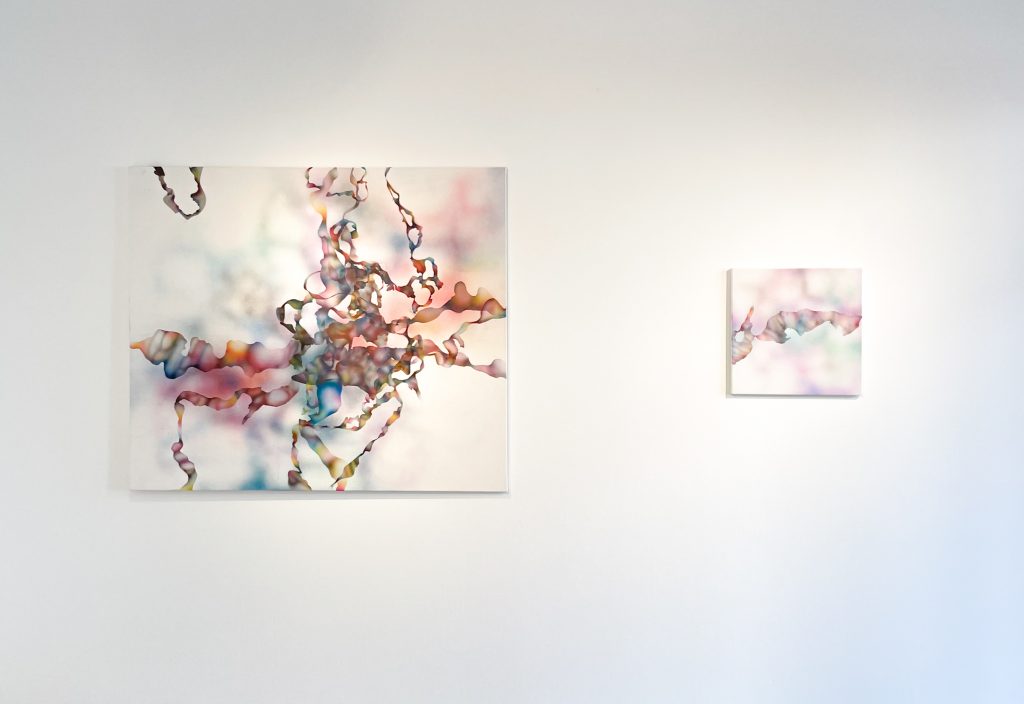
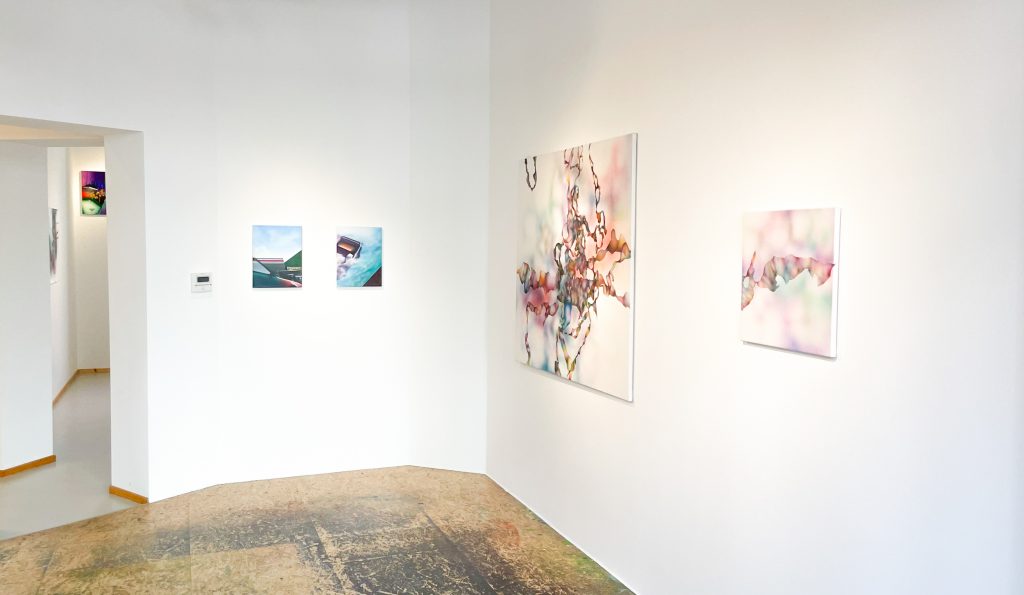
Hide and Seek, Outpost by Galerie Greulich
Photos © Galerie Greulich
Practice Chaos, Palais Carli
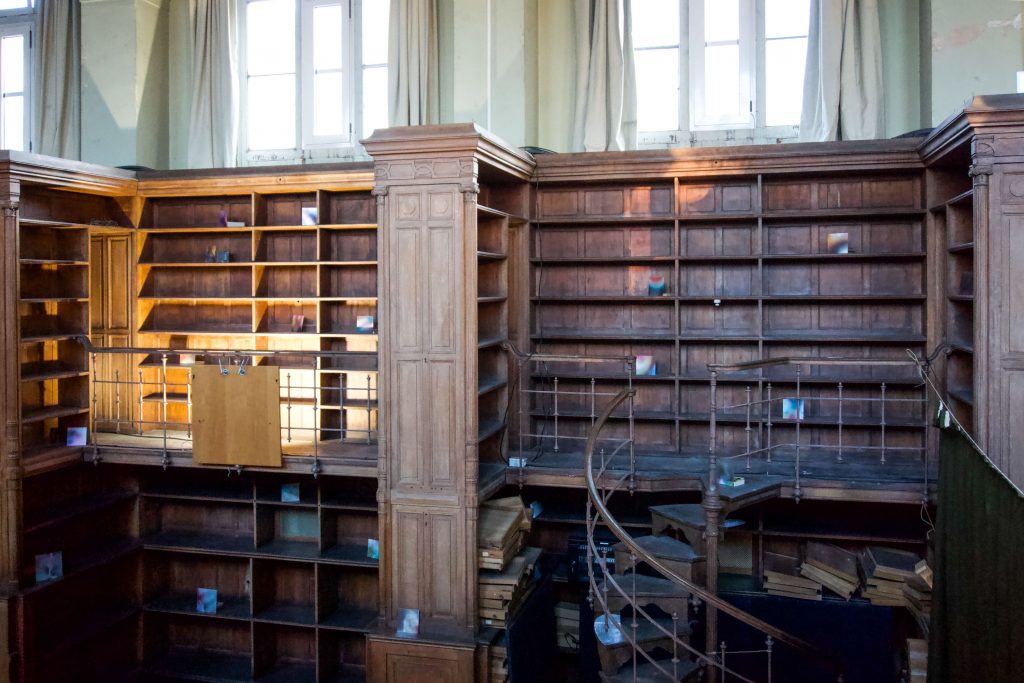
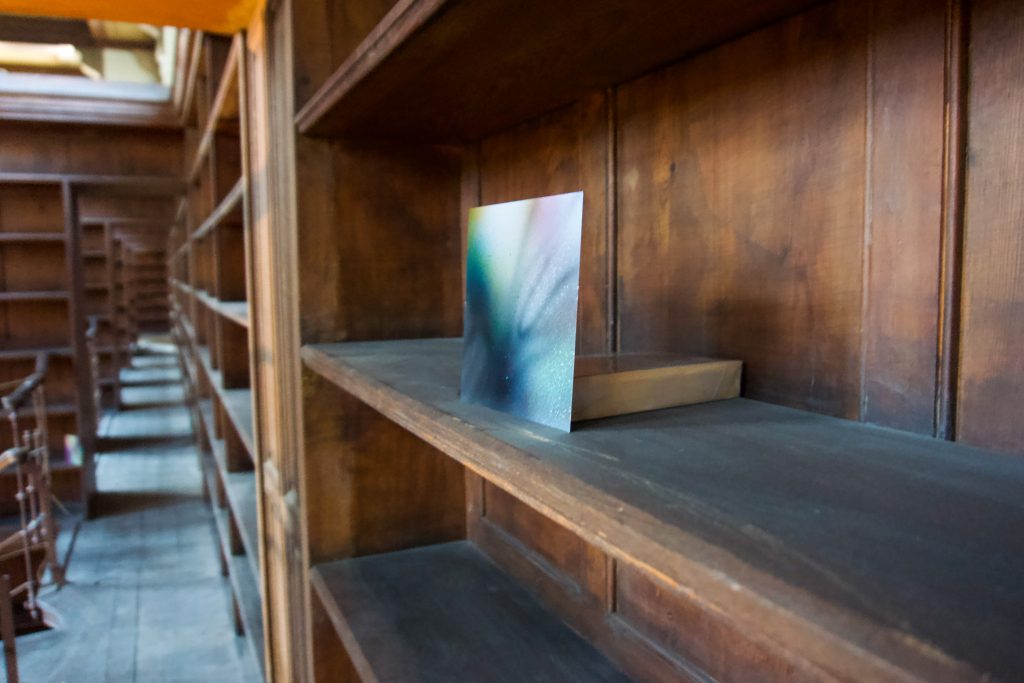
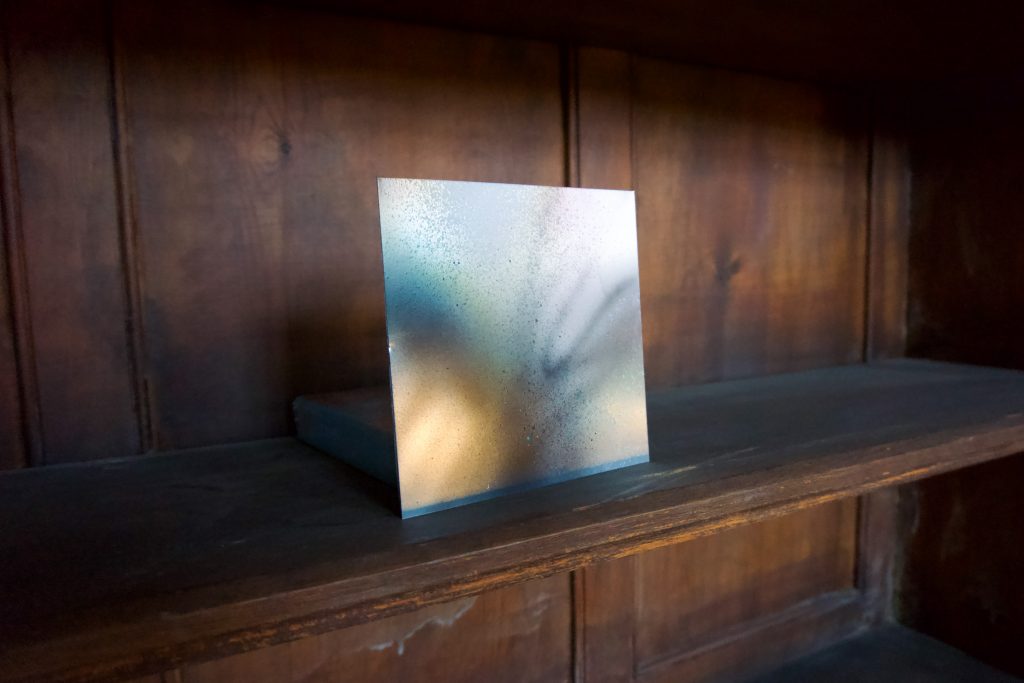
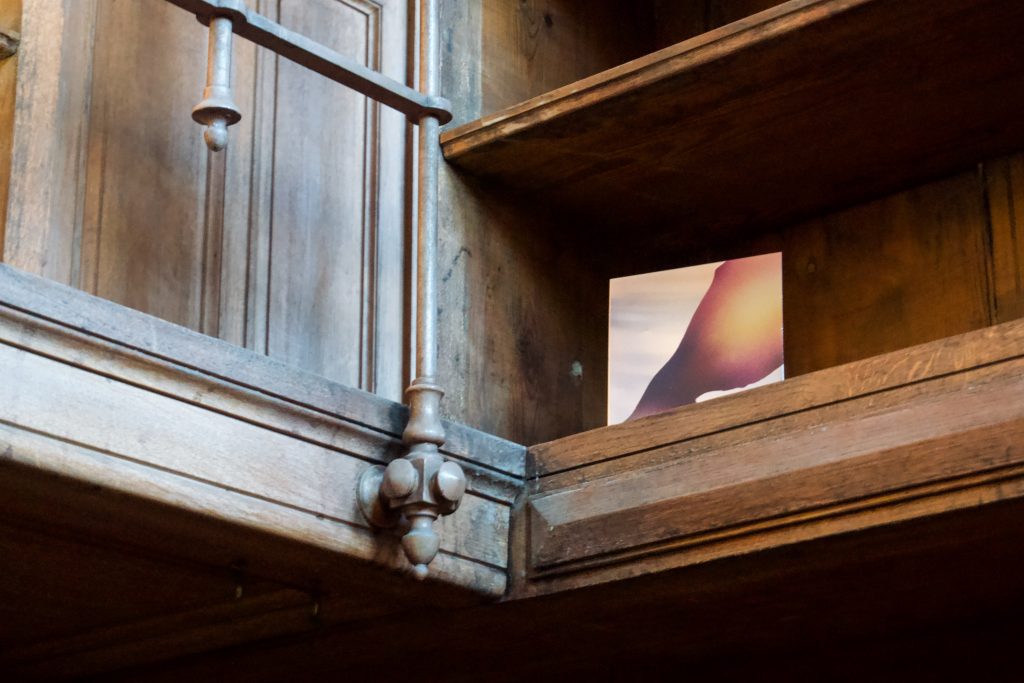
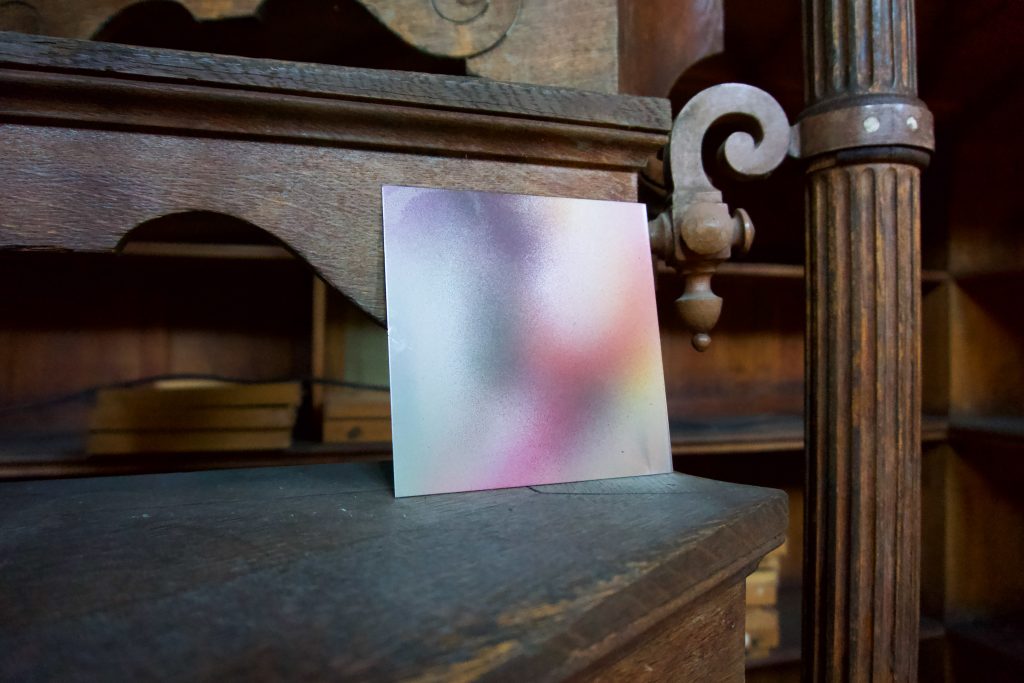
Photos © Mison Schreff
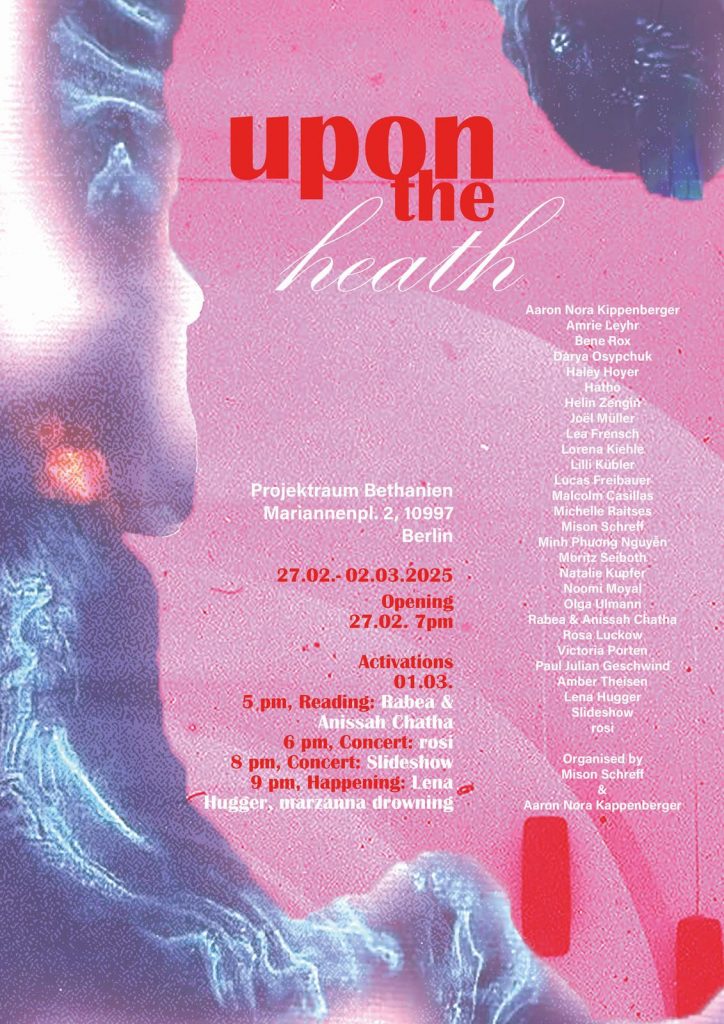
Upon the Heath, Kunstquartier Bethanien (curated)
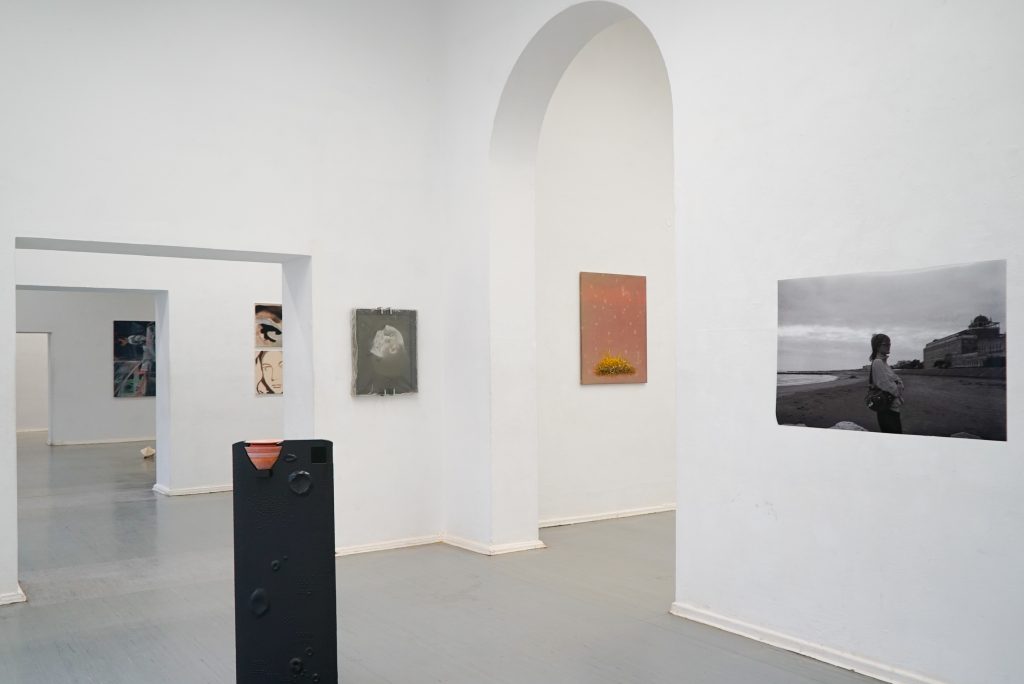
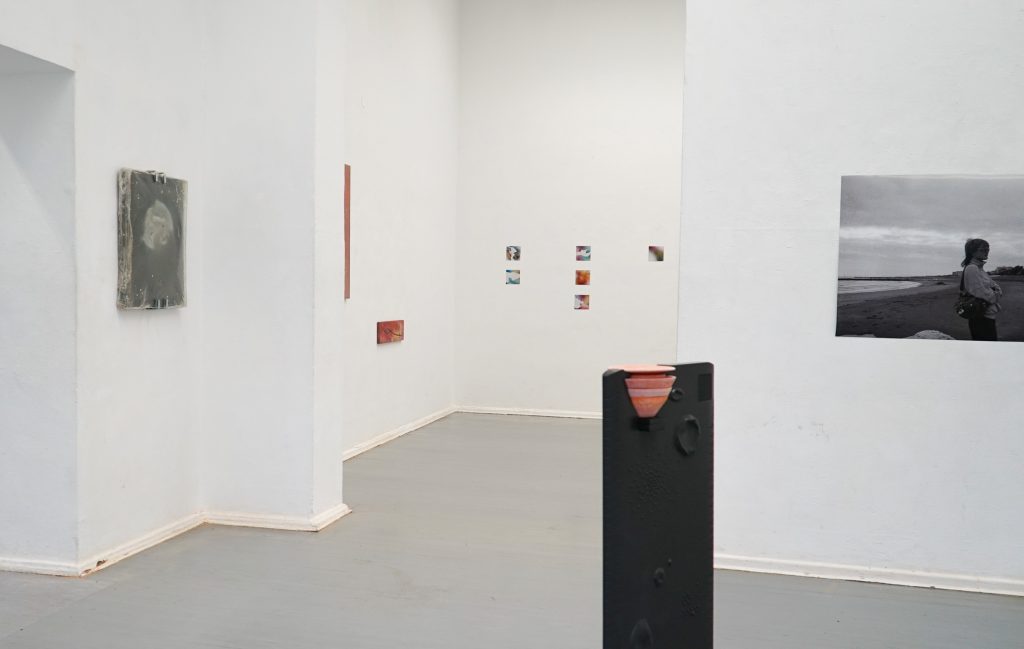
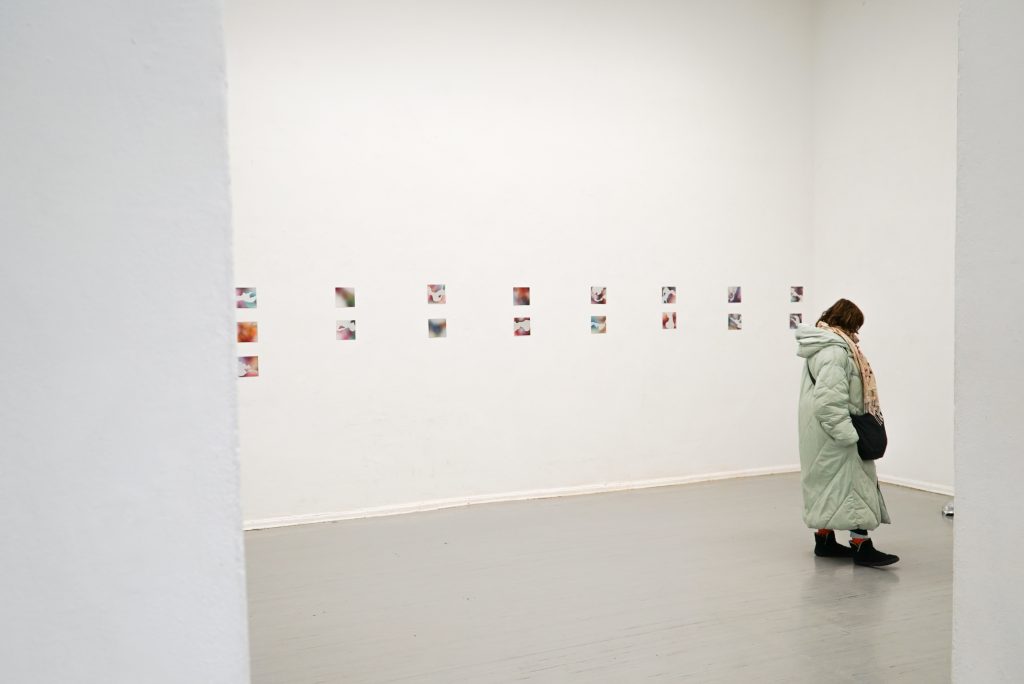
Photos © Mison Schreff
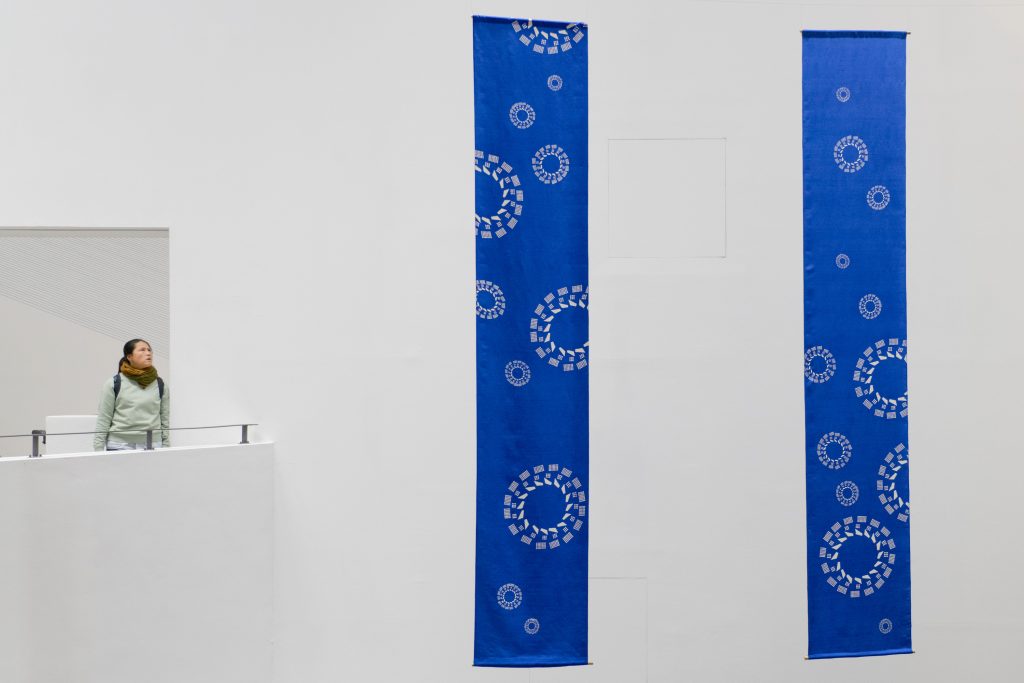
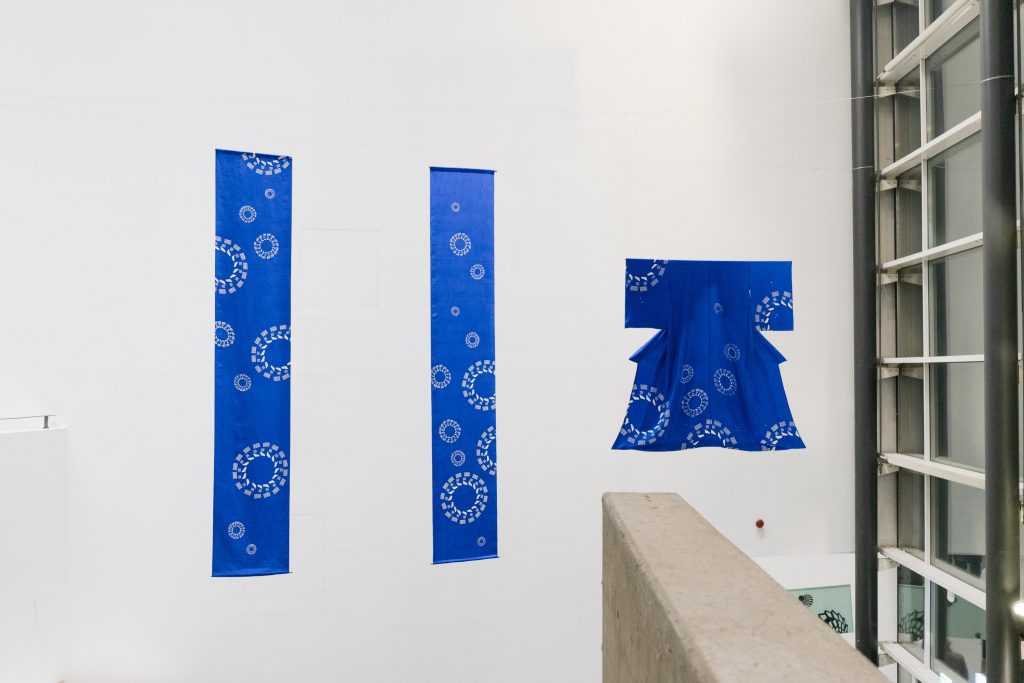
Die Pflanze durch den Asphalt, documenta-Halle
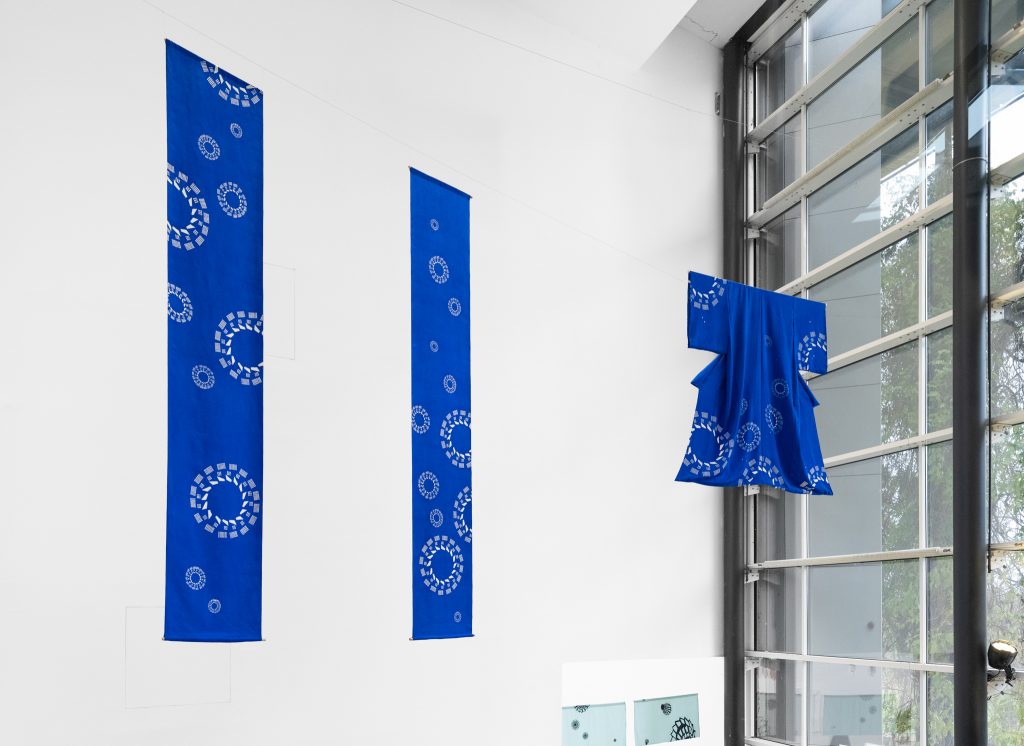
Photo © Lukas Melzer
Photos © Selina Hammer
Ausstellungsort: Documenta Halle
Kuration: Philipp Lange
Dissipating Grid, Sakaimachi Garow (solo)
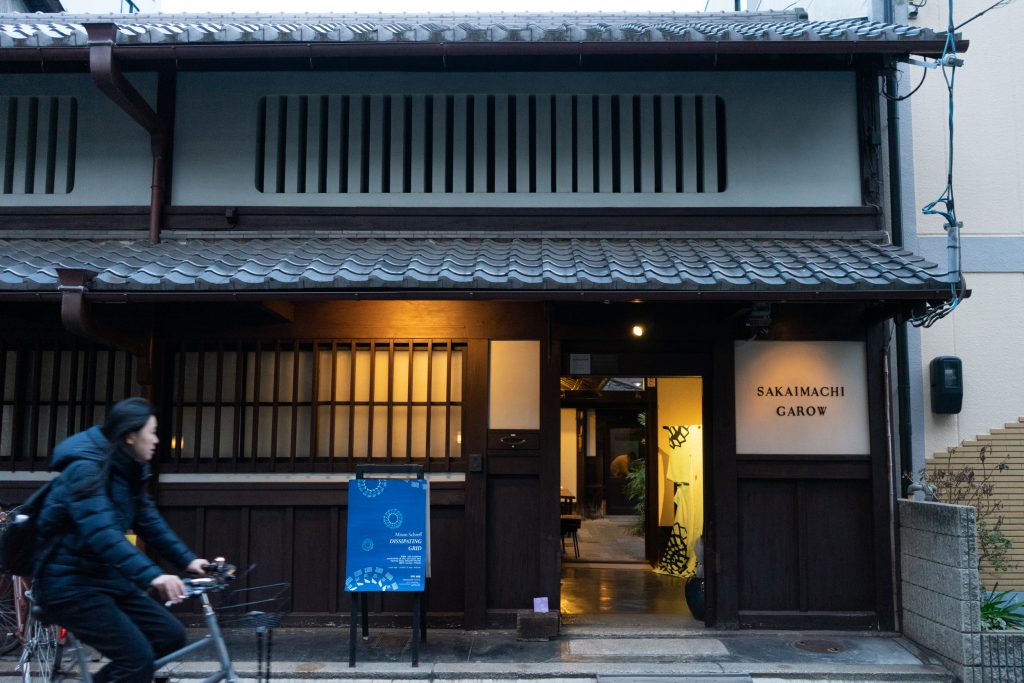
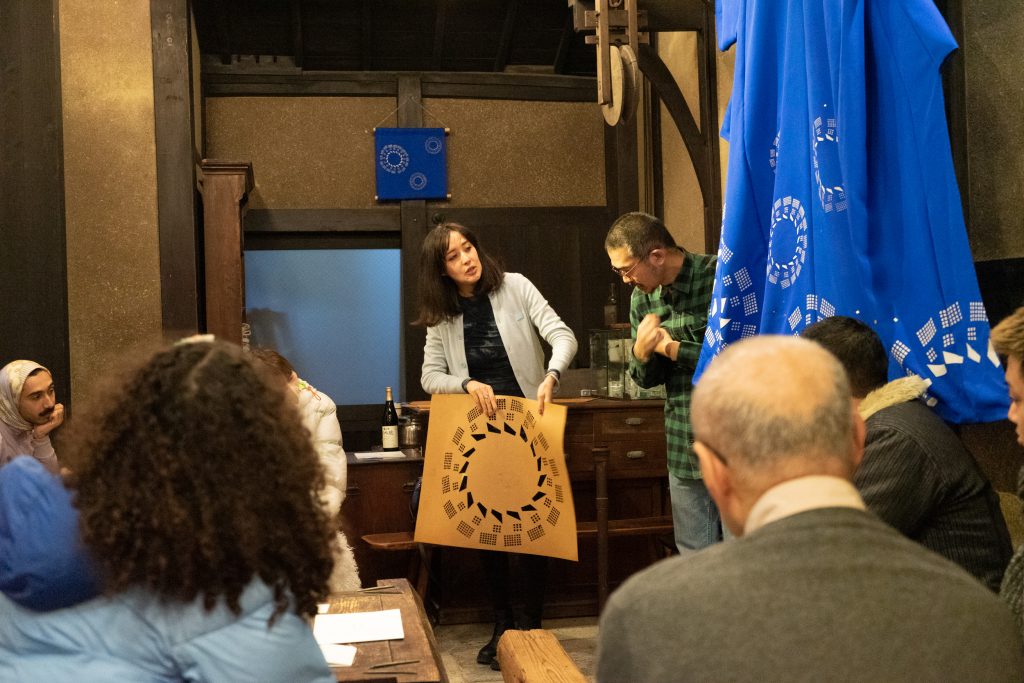
Photos © Louise Martel
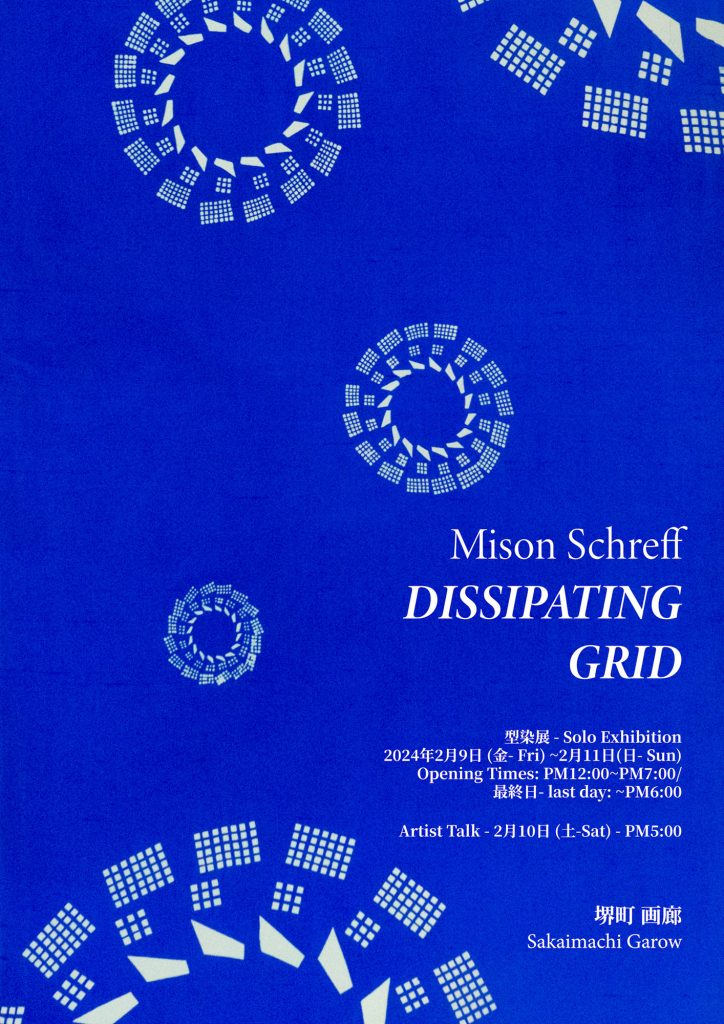
Exhibition Text
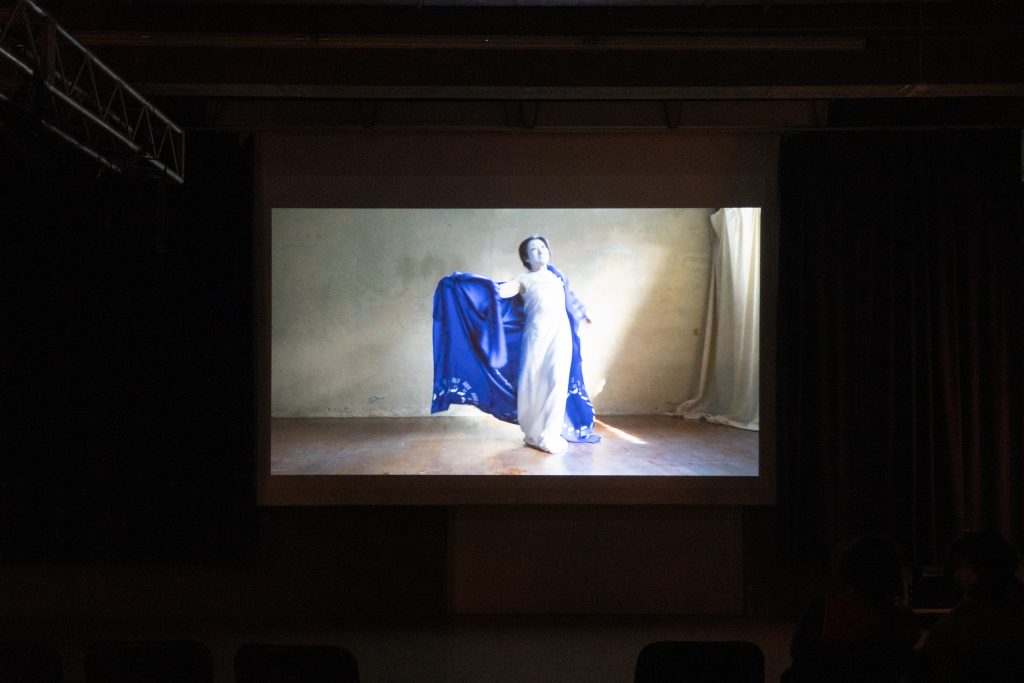
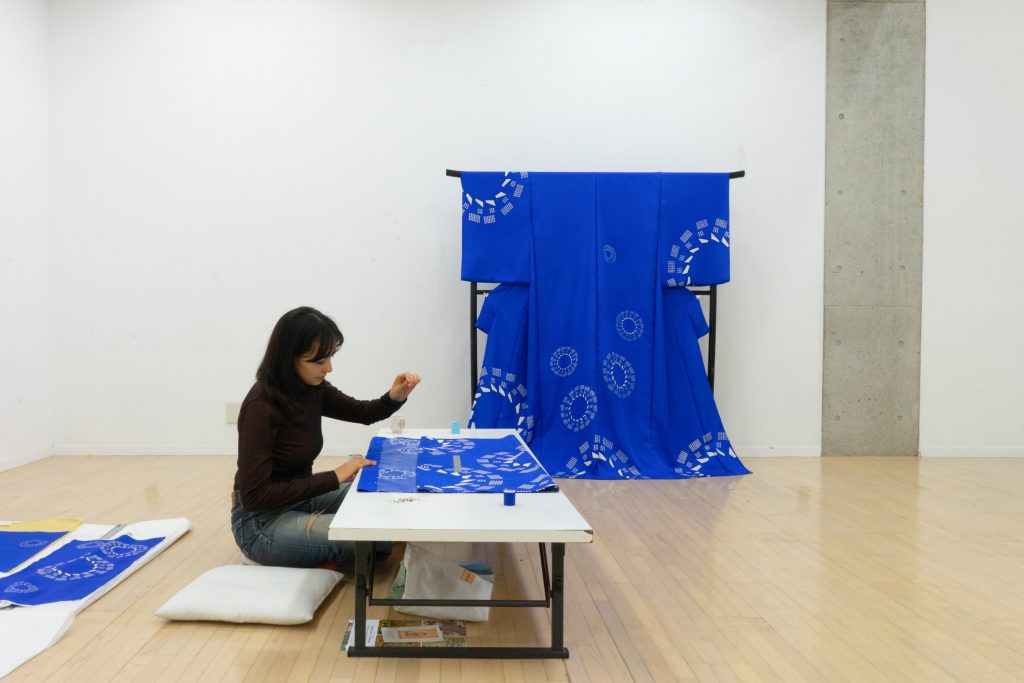
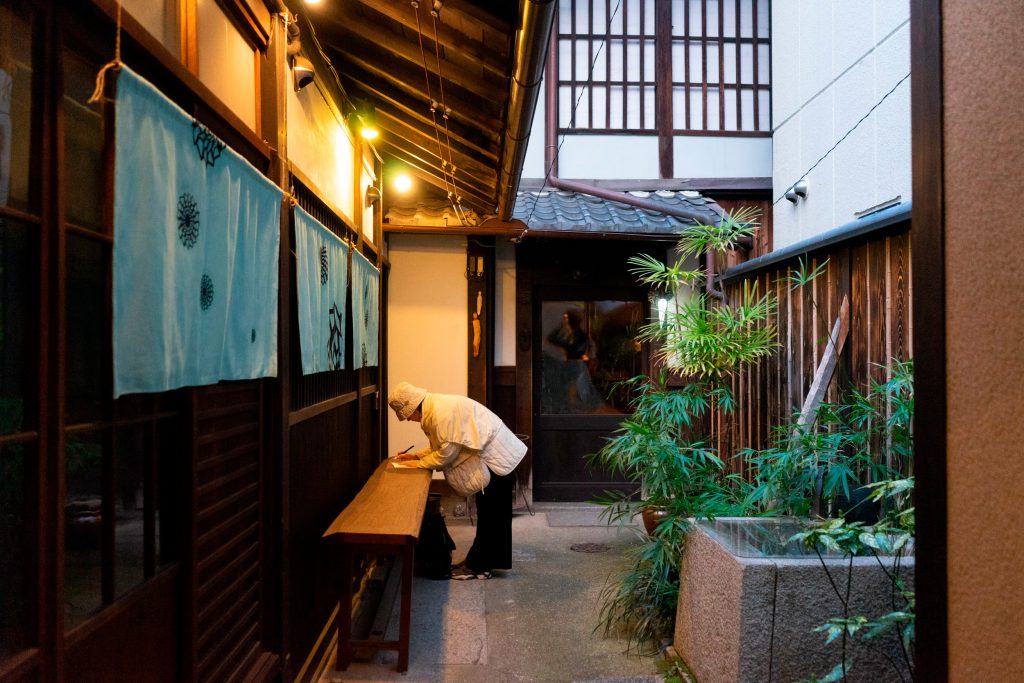
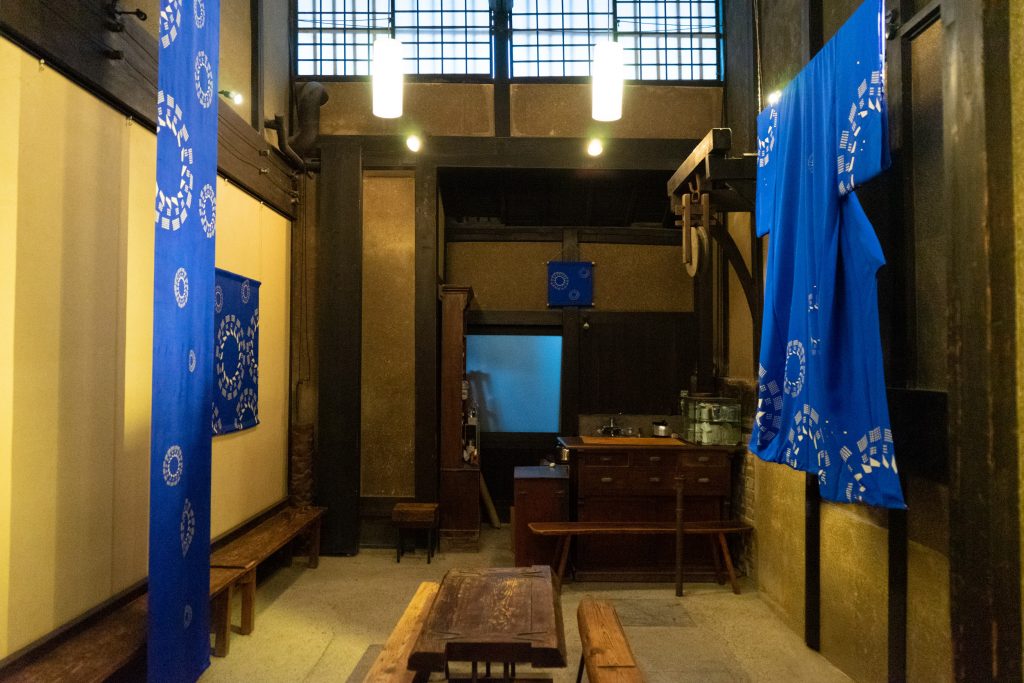
Dissipating Grid is a solo exhibition by Korean German artist Mison Schreff, presented at Sakaimachi Garow Gallery in Kyoto in February 2024. The exhibition unfolds within a historic Machiya townhouse built in 1905, a former merchant residence that preserves the architectural memory and craftsmanship of Kyoto. Composed of a foyer, an inner garden, and a seven-metre-high main hall, the building itself becomes an integral part of the exhibition.
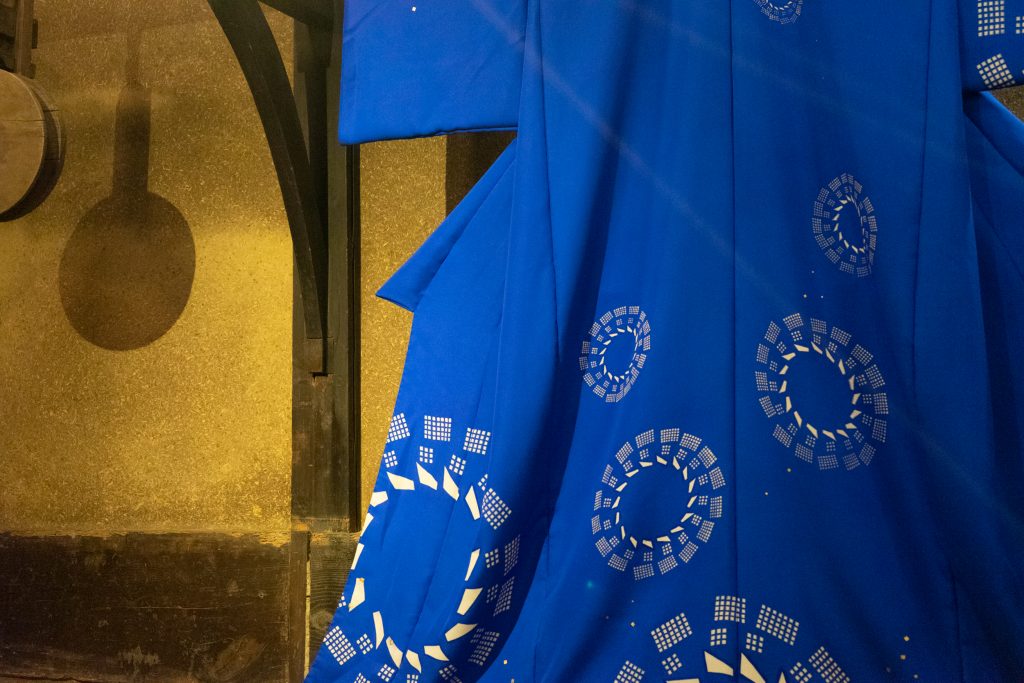
Schreff responds to the spatial character of the Machiya by integrating her silk works directly into the architecture. The textiles inhabit the different areas of the house, entering into dialogue with wooden structures, clay walls, natural materials, and changing light conditions. Rather than functioning as independent objects, the works become spatial presences that connect architecture, material, and the human body.
The exhibition is divided into two parts, following the rhythm of Japan’s changing seasons. The first part introduces silk works dyed in Mizuhanada (水縹), a delicate blue associated with water and sky. The colour also exists in Korea, the artist’s country of birth, as Oksek (옥색). The works refer to Evening in Early Summer (初夏の夕, 1949) by Uemura Shōen, reflecting on the relationship between colour, atmosphere, and the human figure.
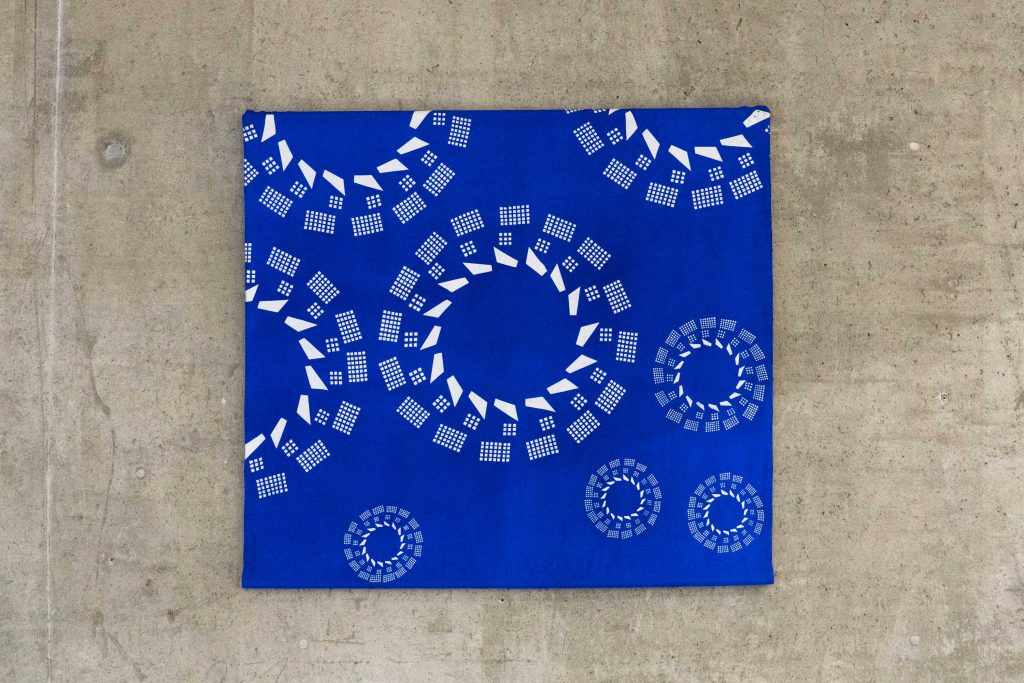
The second part immerses the viewer in Royal Blue, known as Königsblau in Germany and resonating across Japanese and Western colour histories. The intense luminosity of the blue is contrasted with the untouched white of the silk, preserved through the traditional rice-resist technique Katazome. These areas evoke falling snowflakes, transforming the textile surface into a landscape of light and absence.
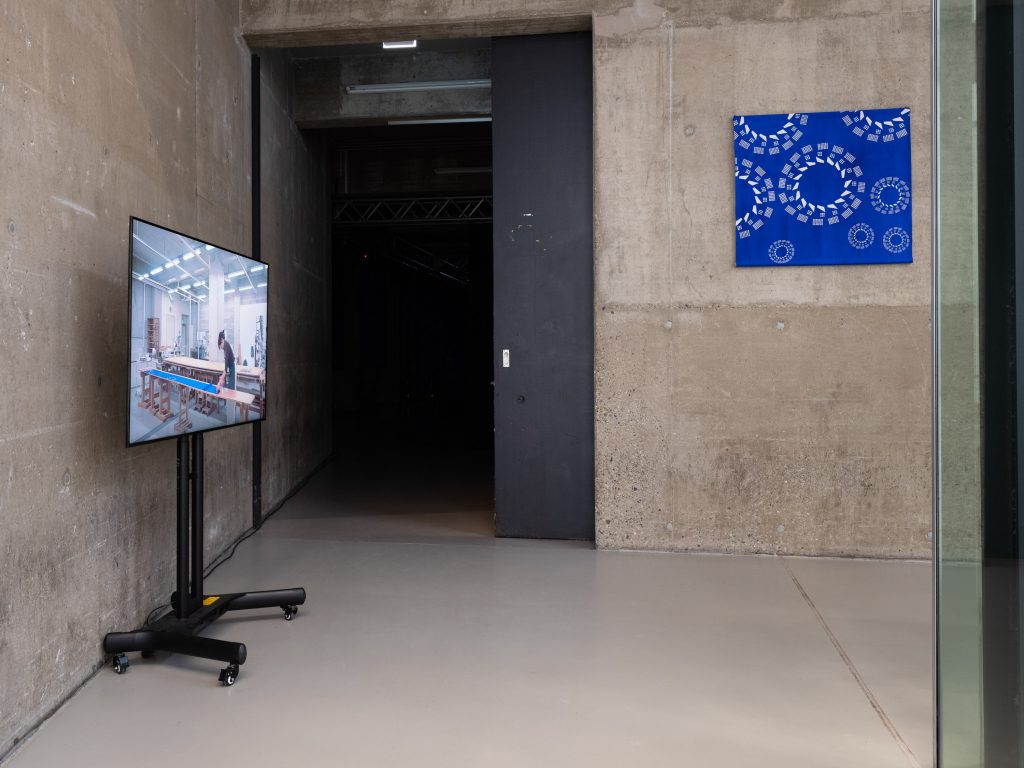
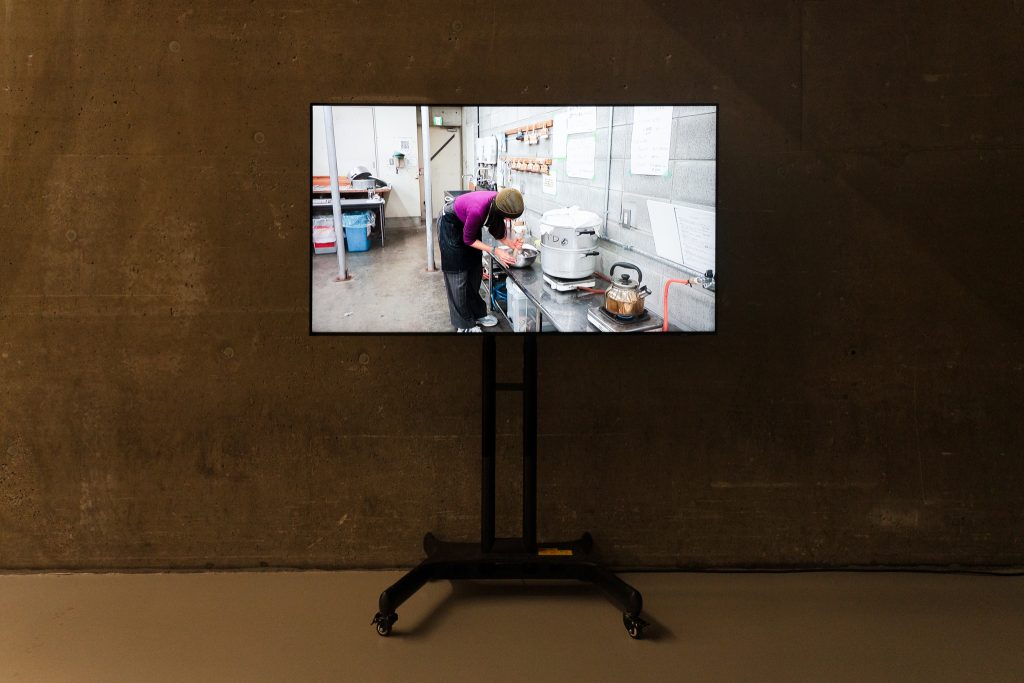
Katazome is a traditional Japanese stencil-dyeing technique that requires a slow and highly skilled process of stencil cutting, rice-resist application, dyeing, washing, and hand sewing. Through its repetitive gestures and physical demands, the technique carries histories of embodied knowledge and textile labour, particularly forms of craft historically associated with women’s work. For Schreff, the process itself becomes part of the artwork. By engaging her own body in the repetitive actions of making and documenting these movements, she reveals the connection between time, labour, and material.
Through the encounter between traditional textile practice, painting, and spatial installation, Dissipating Grid explores processes of translation and transformation. The works bring together different cultural references, materials, and temporalities, creating a space where memory, colour, and the body continuously intersect.
Mison Schreff (b. 1998, Jeonju, South Korea) is a Korean-German artist based in Berlin. Working in the field of expanded painting, she combines painting, textiles, digital processes, installation, and traditional techniques. Her practice has been shaped through studies and artistic research in South Korea, Germany, France, and Japan.
Dissipating Grid ミソン・シュレフ
Dissipating Grid は、韓国・ドイツにルーツを持ち、ベルリンを拠点に活動するアーティスト、ミソン・シュレフによる個展である。2024年2月、京都・坂井町ガロウギャラリーにて開催された本展は、1905年に建てられた歴史的な京町家を舞台としている。かつて商家として使われていたこの建物は、京都の伝統的な建築様式と職人文化の記憶を今に伝える空間であり、玄関、庭、そして高さ7メートルの主室によって構成される連続的な空間体験を生み出している。
シュレフは、この町家が持つ空間性や時間の蓄積に応答しながら、絹による大型作品を建築の中へと組み込んだ。玄関、庭、メインホールに展開される布の作品は、独立したオブジェとしてではなく、建物そのものと呼応する存在として配置されている。絹の繊細な表面は、木造の構造、土壁、自然素材、そして移ろう光と静かに対話し、建築、素材、身体を結びつける。
本展は、日本の季節の巡りに呼応する二部構成となっている。第一部では、絹作品が水縹(Mizuhanada)と呼ばれる淡い青色で染められている。この色は水や空を想起させる透明感を持ち、作家の出身国である韓国では옥색(Oksek)としても存在する。夏の暑さの中を吹き抜ける涼やかな風のような水縹の色彩は、静けさと浮遊感を作品にもたらす。これらの作品は、上村松園による《初夏の夕》(1949年、京セラ美術館所蔵)を参照しながら、色彩、空気感、そして身体の関係性を探っている。
第二部では、鑑賞者はロイヤルブルーの強い光の中へと導かれる。この色はドイツではケーニヒスブラウ(Königsblau)として知られ、日本と西洋双方の色彩文化において象徴的な意味を持つ。また、イヴ・クラインの《インターナショナル・クライン・ブルー(IKB)》とも響き合う。鮮やかな青の中に残された絹本来の白は、型染めに用いられる糊(のり)による防染によって保たれ、降り積もる雪の結晶のようなイメージを生み出している。
作品制作に用いられる型染め(Katazome)は、型紙の制作、米糊による防染、染色、洗浄、縫製など、多くの工程と時間を必要とする日本の伝統的な染色技法である。その反復的で身体的な制作過程には、世代を超えて受け継がれてきた身体知や、歴史的に女性によって担われてきた染織の手仕事の記憶が刻まれている。シュレフにとって、この制作の時間そのものも作品の一部であり、自らの身体を通した反復的な動きを記録することで、時間、労働、素材の結びつきを可視化している。
伝統的な染織技術と絵画、空間表現を横断することで、Dissipating Grid は文化、素材、記憶の間に生じる翻訳と変容のプロセスを探求する。異なる場所、時間、技術が交差する場として、作品は色彩、身体、建築が絶えず関係し続ける空間を形成している。
ミソン・シュレフ(1998年、韓国・全州生まれ)は、ベルリンを拠点に活動する韓国・ドイツ系アーティストである。拡張された絵画(expanded painting)の領域で、絵画、テキスタイル、デジタル技術、インスタレーション、伝統的技法を横断する制作を行っている。韓国、ドイツ、フランス、日本での研究と制作経験を通じて、素材、文化、空間の関係性を探求している。